
Vedic astrology topic guide
Spirituality.
Consider karma, devotion, remedies, discernment, and the religious setting of Jyotish.
Jyotish belongs to a spiritual tradition, but belief cannot be forced.
Jyotish developed within Indian religious and philosophical traditions, where time, karma, duty, ritual, and liberation were discussed as connected parts of life. That setting matters. Removing every spiritual idea from the subject leaves the technique thinner and can distort the meaning of remedies, deities, and dharma. At the same time, a modern reader may be Hindu, follow another faith, remain undecided, or hold no religious belief. The articles in this section explain the traditional frame without making religious conformity a condition of learning.
Karma is often flattened into reward and punishment. In practice, it is a more demanding idea about action, consequence, habit, responsibility, and conditions inherited from the past. A birth chart can be read as a map of tendencies and circumstances, but it does not settle the philosophical argument about free will. People act within limits, and those limits are not equal. Choice still matters. Astrology becomes harmful when it turns suffering into blame or tells someone that injustice must be accepted because it is karmic.
Remedies need the same care. Mantra, prayer, charity, fasting, pilgrimage, service, meditation, Rudraksha, gemstones, and ritual are used in different lineages and communities. They do not all rest on the same theory, and they are not interchangeable products. A remedy should fit the person's health, means, faith, and actual planetary condition. No ethical practitioner can guarantee a marriage, cure an illness, erase a legal problem, or reverse every difficult placement in exchange for an expensive object or ceremony.
Several guides here examine Ishta Devata, Brahma Muhurta, lunar phases, planetary remedies, and the use of devotional practice during difficult periods. Others look at spiritual authority, false gurus, fear of occult attack, and the difference between guidance and manipulation. These are not abstract concerns. A teacher who demands secrecy, obedience, large payments, sexual access, or separation from family is creating a practical safety problem. An astrological explanation should never be allowed to hide that behavior.
Classical sources also require context. A verse may carry layers of technical, religious, and social meaning that disappear in a short translation. Later commentators and regional practices may disagree. Modern astrologers sometimes present a recent custom as an ancient rule, or attach a famous text to a claim without a verifiable citation. Our approach is to say when an idea is classical, when it comes from later practice, and when we are offering a contemporary interpretation. Where a precise source is uncertain, certainty in the prose would be misleading.
Read this section with both respect and discernment. Begin with the philosophical articles on karma, free will, and the aims of life. Move next to guides on practice and remedies, then to articles about teachers, belief, and spiritual risk. You do not need to adopt every practice you encounter, and sincere disagreement is allowed. Ask where a claim comes from and who benefits from it. A useful spiritual discipline should support honesty, steadiness, care for others, and the freedom to ask questions. If it requires fear, dependency, or a promise that cannot be examined, stepping back is a reasonable response.
- 01
Distinguish classical teaching, later practice, and modern interpretation.
- 02
Choose remedies that fit your health, means, faith, and actual chart.
- 03
Treat demands for secrecy, obedience, money, or isolation as practical warning signs.
Continue with
Articles in this collection

Dharma Artha Kama Moksha Houses in Vedic Astrology: The Four Aims of Life in Your Chart
Discover how Dharma, Artha, Kama and Moksha houses in your Vedic birth chart show the balance of purpose, livelihood, desire and liberation. Learn to identify dominant aims and areas needing development through house lords, yogas, elemental balance and Ashtakavarga scores.
Astrology vs Free Will: Can Bad Planetary Placements Be Completely Overcome?
Explore whether difficult planetary placements in a birth chart can be overcome through free will, spiritual effort and surrender to God. Insights from Vedic astrology, Bhagavad Gita and the Bible.

Black Magic Abhichara Evil Eye and Tantric Afflictions in Vedic Astrology Causes
Explore how Vedic astrology identifies causes of Abhichara, Nazar and tantric afflictions through Gulika, Mandi, Badhaka lords, Rahu-Ketu and chart factors that distinguish energetic interference from ordinary distress.
How Vedic Astrology Shapes Beliefs in God: From Blind Faith to Atheism
Discover how Vedic astrology maps the spectrum of belief from blind faith to atheism through the 9th house, Jupiter, Ketu and related factors. A clear, chart-based guide.
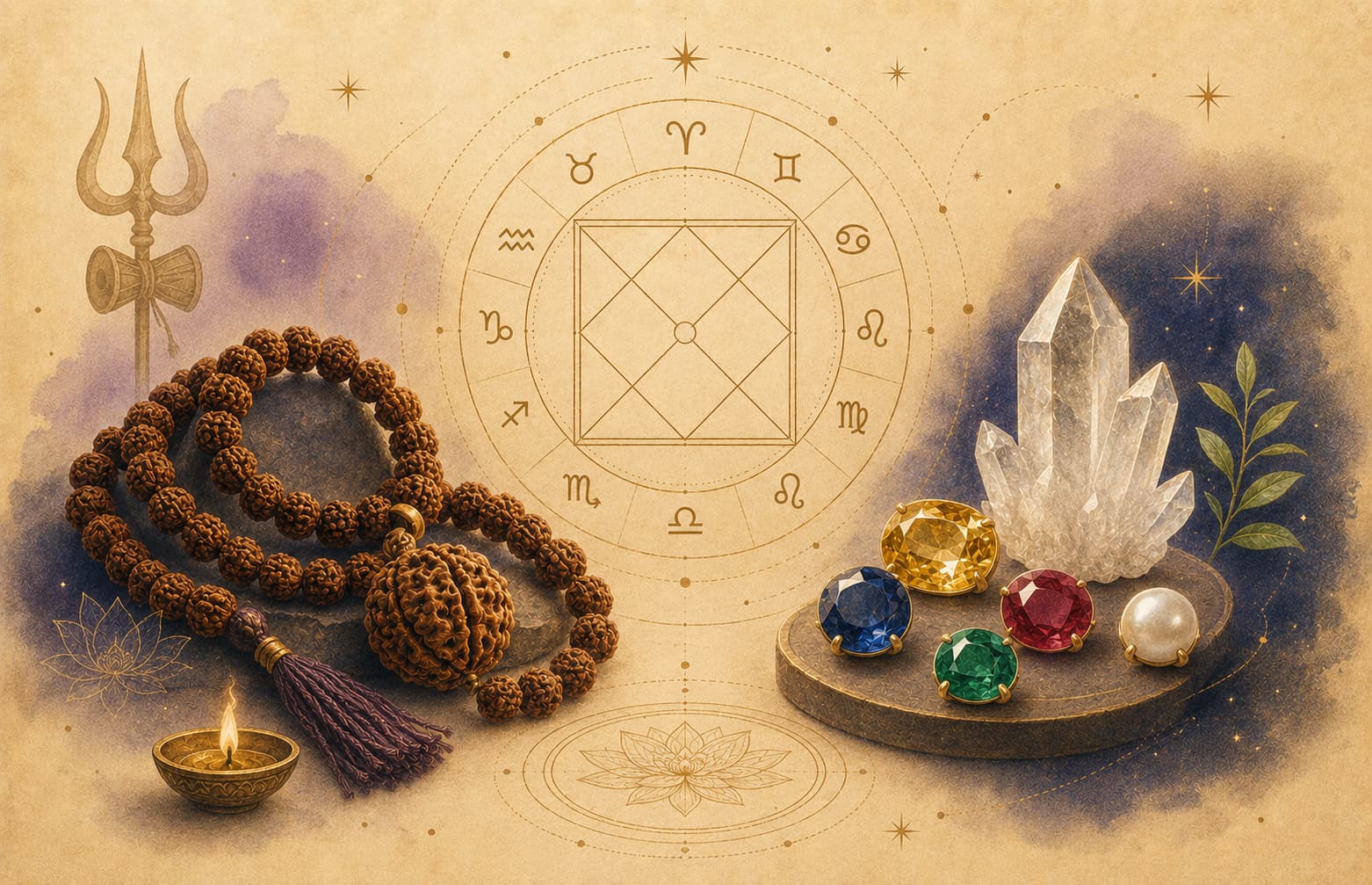
How Rudraksha, Gemstones and Crystals Are Used in Jyotisha and Indian Spirituality
Explore the distinct roles of Rudraksha, gemstones and semi-precious crystals in Vedic astrology and spiritual practices. Learn planetary links, traditional uses, differences and practical guidance for balanced application.

10 Most Powerful Vedic Astrology Remedies that apply on All Planets
Discover 10 practical Vedic astrology remedies that strengthen several planets together. Learn Navagraha practices, charity, mantra, and daily habits rooted in Jyotisha tradition for balanced planetary support.

Brahma Muhurta: How to Use This Sacred Pre-Dawn Time for Clarity and Growth
Learn what Brahma Muhurta means, how to calculate its exact timing from local sunrise, why it is considered sattvic, and practical ways to use this 48-minute window for meditation, study, yoga and intentional living.
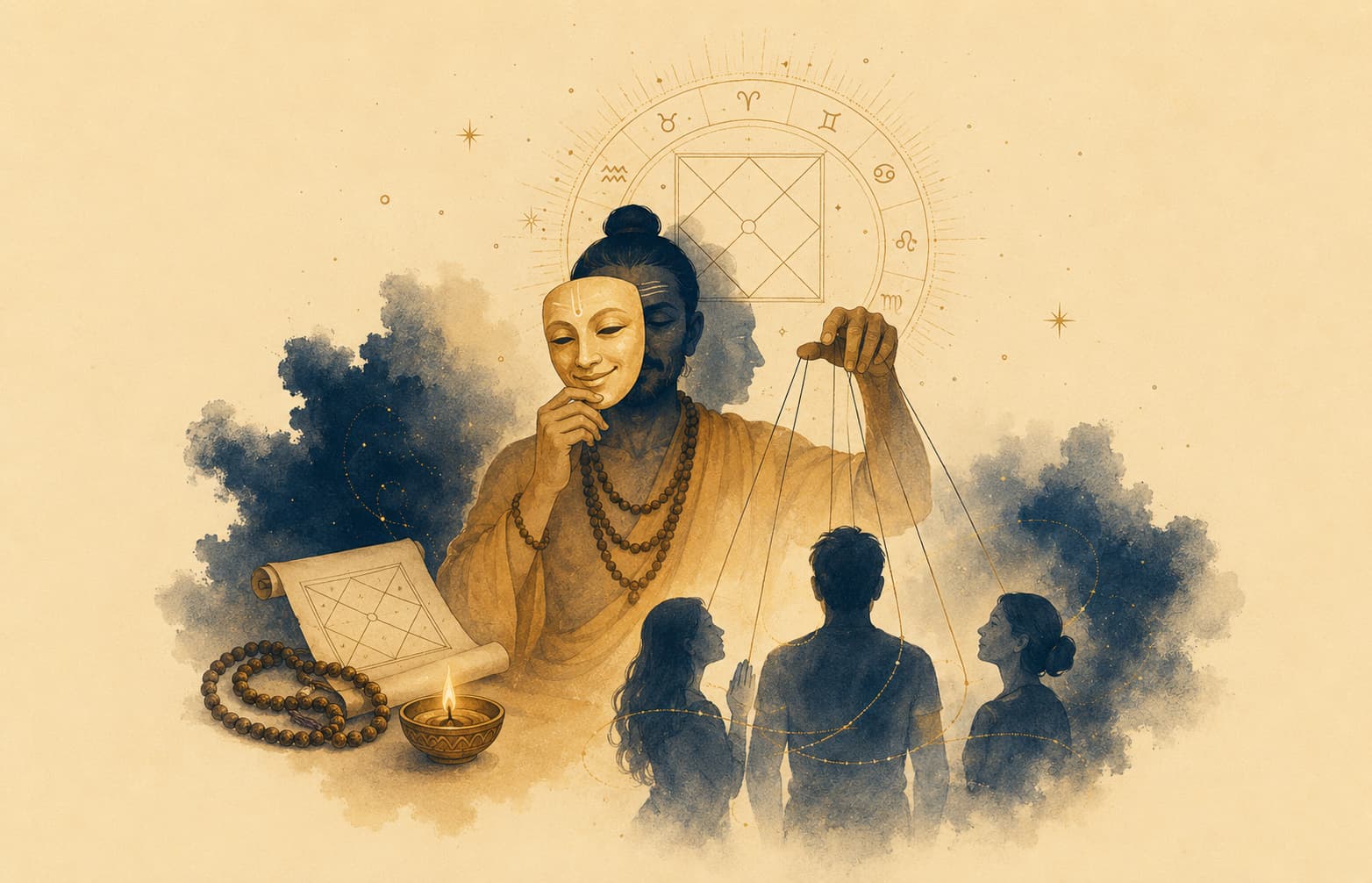
Fake Gurus and Spiritual Manipulation: Vedic Astrology Insights on Why Seekers Fall for Them
Discover how Vedic astrology explains the rise of fake gurus, the role of Guru Chandal Yoga, afflicted 9th house, Rahu on Jupiter or Arudha Lagna, and why vulnerable seekers enter exploitative groups. Learn the difference between genuine guidance and manipulation.

Finding Your Ishta Devata Through the Birth Chart
Learn the classical Jaimini method to identify your Ishta Devata from the birth chart using Atmakaraka, Karakamsha in the Navamsa, the 12th house, and supporting insights from the D20 chart. Cultivate devotion with clarity and humility.