Vedic Astrology of Body Dysmorphia, Eating Disorders and Cosmetic Surgery Obsession
Explore traditional Vedic astrology interpretations of body dysmorphia, eating disorders and cosmetic surgery obsession through Venus-Rahu placements, afflicted Lagna and Moon, eighth house factors and Saturn-Ketu patterns. Educational insights only.
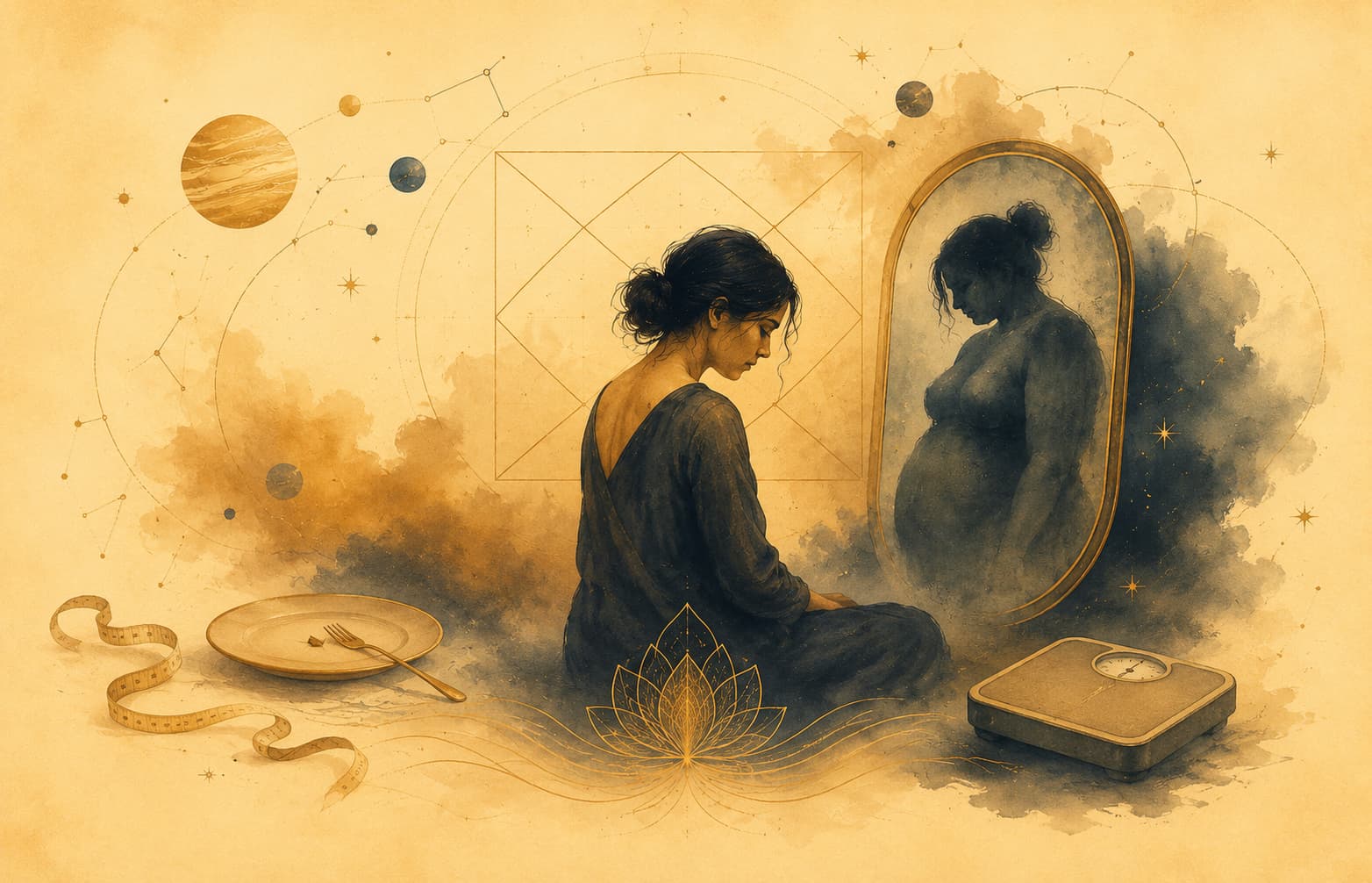
In an age of filtered photographs, constant comparison and rapid access to surgical procedures, many people experience intense dissatisfaction with their appearance. Some feel that a particular facial feature or body part is deeply flawed even when others see nothing unusual. Others move through cycles of severe food restriction, over-exercise or repeated cosmetic interventions in search of a version of themselves that finally feels acceptable. These experiences can be painful and complex. Modern psychology recognises conditions such as body dysmorphic disorder and various eating disorders as serious mental health concerns that require professional care.
Vedic astrology, or Jyotisha, does not diagnose medical or psychological conditions. It offers a traditional language for examining patterns of self-perception, attachment to form, and the drive to alter the physical body. Certain planetary combinations have long been studied in classical texts and later commentaries for their association with heightened sensitivity around appearance, irregular relationship with food, and interest in transformative or surgical processes. The most frequently discussed indicators include Venus-Rahu combinations in the first or second house, an afflicted Lagna or Moon, strong eighth-house involvement, and Saturn-Ketu configurations linked with restriction.
The same combination can take another relational form in codependency and narcissist-empath dynamics.
This article explores these traditional associations in a clear, structured way. It explains the underlying planetary logic, shows how an astrologer might examine a birth chart, notes the many factors that modify results, and emphasises that any such discussion remains educational. Anyone experiencing distress related to body image, eating or compulsive alteration of appearance should consult qualified medical and mental health professionals. Astrology can support self-reflection; it does not replace clinical care.
Key Takeaways
- Body image challenges in Jyotisha are most often examined through the Lagna (self and physical form), second house (face, food and speech), Venus (beauty and sensory satisfaction), Moon (emotional mind and body awareness), Rahu (obsession and distortion), Ketu (detachment and extremes) and the eighth house (transformation, surgery and hidden processes).
- Venus conjunct or aspected by Rahu in the first or second house is classically linked with an unsettled or exaggerated focus on appearance and facial features.
- An afflicted Lagna or Moon can indicate fluctuating or critical self-perception that is easily disturbed by external feedback.
- Eighth-house planets, especially malefics or Venus under pressure, are traditionally associated with interest in surgical or transformative procedures involving the body.
- Saturn-Ketu combinations, particularly involving the second or sixth house or their lords, may correlate with patterns of restriction, denial or extreme control around food and physical discipline.
- No single placement creates a fixed outcome. Dignity, aspects, house lordships, divisional charts, dashas and the overall strength of the chart all modify expression.
- Traditional remedies focus on cultivating balanced Venus, stabilising the Moon and reducing obsessive Rahu influence through ethical living, mantra, charity and disciplined routine rather than promises of cure.
Understanding the Core Theme in Traditional Terms
Body dysmorphia, as understood in contemporary psychology, involves a persistent preoccupation with perceived defects in appearance that are not observable or appear slight to others. Eating disorders encompass a range of patterns including severe restriction, binge-purge cycles and compulsive exercise driven by body image concerns. Cosmetic surgery obsession refers to repeated elective procedures pursued in the hope of resolving deep dissatisfaction that surgery alone rarely settles.
In Jyotisha these themes are not named with modern clinical vocabulary. Instead, classical and later authors discuss related experiences under the headings of distorted self-view (Lagna and Moon afflictions), unsettled relationship with beauty and sensory pleasure (Venus under pressure from Rahu or malefics), irregular habits around food and speech (second house and its lord), and attraction to radical transformation of the physical form (eighth house). The underlying idea is that the mind’s capacity to hold a stable, kind image of the body can be disturbed when certain grahas interact in particular ways.
The first house, or Lagna, represents the physical body, overall vitality and the way a person experiences their own form. The second house governs the face, mouth, food intake and the accumulation of resources that support the body. Venus is the natural significator of beauty, harmony, refinement and the pleasure taken in one’s appearance. The Moon reflects the emotional mind and the fluid, changing sense of how the body feels from day to day. Rahu amplifies, distorts and creates intense desire for that which seems just out of reach. Ketu tends toward separation, extremes and a paradoxical combination of detachment and sudden intensity. Saturn brings restriction, discipline and sometimes harsh self-judgment. The eighth house rules longevity, hidden processes, surgery, inheritance of difficult patterns and radical change.
When these factors combine in specific configurations, traditional interpretation suggests a greater likelihood of struggle with self-image, food regulation or the urge to reshape the body through external means. The key word is likelihood, not certainty. Many people with similar placements never develop clinical disorders, while others without the classic combinations may still experience them. The complete chart, current dashas and real-life circumstances always matter more than any isolated yoga.
Venus-Rahu in the First or Second House: Warped Facial and Body Perception
Venus and Rahu form one of the most frequently examined combinations in discussions of appearance-related intensity. Venus seeks harmony, proportion and aesthetic satisfaction. Rahu seeks amplification, novelty and the fulfilment of desires that ordinary means cannot satisfy. When these two grahas occupy or strongly influence the first house, the person may experience their own physical form as the primary arena in which Rahu’s restless hunger plays out. The first house is the body itself; any planetary energy placed there colours the native’s felt sense of self.
In the second house the same combination often focuses more sharply on the face, teeth, smile, skin tone or the act of eating. Classical writers note that Rahu with Venus can produce unusual or striking physical features, strong interest in cosmetics, jewellery or adornment, and at times an inability to feel satisfied with the reflection in the mirror. The distortion is not necessarily visual in the optical sense. It is perceptual and emotional: the mind keeps finding a flaw that must be corrected, improved or hidden.
The quality of the combination changes with sign, dignity and aspects. Venus in its own signs (Taurus or Libra) or exaltation (Pisces) tends to express more through refinement and artistic presentation. When Venus is debilitated (Virgo) or combust, the same Rahu influence may feel more critical and less graceful. Rahu’s own dignity and the nakshatra it occupies further colour the result. Rahu in a Venusian nakshatra such as Bharani, Purva Phalguni or Purva Ashadha can intensify the focus on physical attractiveness and sensory experience. Aspects from Jupiter may soften the combination by introducing a more philosophical or ethical lens. Aspects from Saturn or Mars can add severity or restlessness.
A hypothetical illustration helps clarify the logic. Suppose a person has Taurus Lagna with Venus and Rahu together in the first house. Venus is strong by sign yet joined by Rahu. The native may possess naturally pleasant features and a refined sense of style, yet still feel a persistent sense that something is “not quite right.” The mind may fixate on a particular measurement, a perceived asymmetry or the need for constant grooming. If the second house is also activated by transit or dasha, attention may shift to dietary control or facial procedures. The chart does not cause the behaviour; it describes a predisposition that life circumstances, family patterns and psychological factors can activate or leave dormant.
It is equally important to note constructive expressions. The same Venus-Rahu combination in a well-supported chart can produce outstanding achievement in fields that require an acute eye for beauty, such as design, fashion, photography, cinema or aesthetic medicine practised with ethical restraint. The difference often lies in whether the energy is channelled outward into creative work or turned inward as relentless self-critique.
Afflicted Lagna and Moon: Unstable Self-Image and Emotional Body Awareness
The Lagna and its lord represent the foundation of physical and psychological identity. When the Lagna is occupied or aspected by malefics without adequate benefic support, traditional interpretation speaks of challenges in maintaining a stable sense of bodily comfort or self-acceptance. Mars can introduce restlessness and a tendency toward forceful self-improvement. Saturn can produce feelings of inadequacy or a harsh internal critic. Rahu can create a sense of never quite belonging in one’s own skin. Ketu may bring periods of dissociation or sudden shifts in how the body is experienced.
The Moon’s condition is equally central. The Moon governs the mind’s fluctuating awareness of the body, appetite, sleep and emotional security. An afflicted Moon, especially when placed in the sixth, eighth or twelfth house or under the influence of Saturn, Rahu or Ketu, is classically associated with irregular eating rhythms, heightened sensitivity to criticism about appearance, and difficulty settling into a peaceful relationship with physical form. The Moon’s nakshatra further refines the picture. A Moon in Ardra, for example, may experience the body through themes of upheaval and renewal. A Moon in Ashlesha can bring intense, sometimes secretive emotional patterns around nourishment and control.
Readers following this theme into intimacy and partnership may also recognize trauma bonding and Stockholm syndrome.
When both Lagna and Moon are under simultaneous pressure, the native may find that self-image changes markedly with mood, hormonal cycles or social feedback. A single critical comment or an unflattering photograph can trigger days of preoccupation. Conversely, supportive aspects from Jupiter or a strong Venus can provide resilience and the capacity to recover a kinder internal narrative.
Astrologers also examine the Navamsha (D9) and the Drekkana (D3) for deeper confirmation. An afflicted Lagna lord in the Navamsha can indicate that the challenge is woven into the deeper pattern of the soul’s journey rather than being merely a surface transit effect. The Drekkana, which deals with siblings, courage and the physical body in more detail, can show whether the difficulty expresses through comparison with others or through private internal standards.
The Eighth House and Surgical Interventions
The eighth house is the domain of longevity, inheritance, occult knowledge, sudden events and all processes that transform the body from within or through intervention. Surgery, whether medical or elective, falls under its significations because it involves cutting, alteration of hidden structures and a period of recovery that temporarily suspends ordinary life.
When the eighth house, its lord or planets placed in it become prominent through dasha or transit, traditional texts note an increased likelihood of surgical experiences. Venus in the eighth, especially if afflicted, can specifically point toward procedures motivated by aesthetic concerns. Mars in the eighth may indicate more urgent or trauma-related interventions. Rahu or Ketu in the eighth can correlate with unconventional or repeated procedures and a fascination with extreme transformation.
The connection is not limited to cosmetic surgery. The same house rules other forms of bodily change: organ transplantation, reconstructive work after injury, and even the profound physical shifts that accompany certain spiritual practices. In the context of body image concerns, however, the eighth house often appears when the native feels that ordinary means of self-improvement are insufficient and that a more radical intervention is required.
A strong and well-aspected eighth house can also produce regenerative capacity, deep psychological insight and the ability to recover from major physical challenges. The difference between constructive transformation and compulsive alteration often depends on the condition of the lagna lord, the presence of benefic aspects, and the native’s overall maturity during the relevant dasha period.
Saturn-Ketu Combinations and Food Restriction Patterns
Saturn and Ketu together form one of the more austere combinations in Jyotisha. Saturn represents discipline, limitation, time and the consequences of past actions. Ketu represents detachment, past-life residues and the tendency to swing between extremes of involvement and renunciation. When these two grahas influence the second house (food and face), the sixth house (digestion, routine and service), the Moon, or the lagna, traditional interpretation has long associated them with patterns of restriction, severe self-discipline and periods of denial around nourishment.
This same symbolism can affect inner life in ways examined in Saturn-Ketu and chronic isolation.
The combination does not automatically produce an eating disorder. Many people with Saturn-Ketu influence simply prefer simple food, maintain strict routines, or find satisfaction in fasting practices undertaken for spiritual reasons. In more difficult charts, however, the same energy can express as an inability to feel satisfied by ordinary nourishment, a tendency to equate thinness or control with moral worth, or cycles of extreme restriction followed by collapse.
The sign and house matter greatly. Saturn-Ketu in Capricorn or Aquarius may express through structured, almost bureaucratic control of diet and exercise. In watery signs the pattern can become more emotional and hidden. When the combination aspects the second lord or sits in the second house itself, the focus on food intake becomes more direct. Aspects from Jupiter can introduce a more philosophical or compassionate framing, while Mars can add a driven, competitive quality to the restriction.
Classical authors sometimes link such configurations with the concept of “upavasa” or regulated fasting, yet they also warn against extremes that deplete the body. Modern readers must remember that traditional fasting guidelines were developed in a cultural context that valued moderation and medical knowledge of the time. Applying them without contemporary medical guidance can be harmful, especially for anyone already struggling with disordered eating.
How Astrologers Examine These Patterns in a Birth Chart
A responsible examination follows a clear sequence rather than jumping to dramatic conclusions from one yoga.
First, assess the Lagna and its lord. Note the sign, dignity, aspects and any conjunctions. A Lagna occupied by Venus and Rahu immediately draws attention to self-image themes, yet the strength of the lagna lord must also be checked.
Second, evaluate the Moon. Its sign, house, aspects, nakshatra and relationship with the lagna lord reveal the emotional climate in which body awareness arises.
Third, study Venus thoroughly. Its house, sign, aspects, conjunctions (especially with Rahu or Ketu), and condition in the Navamsha show how the native relates to beauty, pleasure and physical form.
Fourth, examine the second house and its lord for themes of face, food and speech. Any connection between the second house and the eighth, sixth or twelfth can intensify the pattern.
Fifth, look at the eighth house, its lord and occupants for indications of surgical or transformative processes.
Sixth, note any Saturn-Ketu connections to the houses or planets already under discussion.
Seventh, consider the current and upcoming dashas. A Venus-Rahu period, a Saturn-Ketu period, or an eighth-house lord dasha can activate latent tendencies.
Eighth, review relevant divisional charts, especially the Navamsha for deeper psychological patterns and the Drekkana for physical body details.
Finally, weigh the overall chart strength, the presence of cancelling factors (such as strong Jupiter aspects or neecha bhanga), and the native’s lived circumstances. A placement that looks severe on paper may express mildly in a resilient individual with good support systems, while a milder combination can become intense under prolonged stress or trauma.
Constructive Possibilities Within the Same Placements
It is a common error to treat every challenging combination as purely negative. The same planetary energies that can fuel body image distress can also support remarkable creativity, healing work and spiritual insight.
Venus-Rahu, when directed outward, often produces excellence in visual arts, design, performance and any field that requires an intuitive grasp of aesthetics. Many successful stylists, photographers and aesthetic practitioners carry this combination in constructive form.
An afflicted yet resilient Moon can develop into deep empathy for others who struggle with self-acceptance, leading to careers in counselling, nutrition education or body-positive advocacy grounded in genuine experience.
Eighth-house strength can support regenerative medicine, research into longevity, or profound psychological transformation work.
Saturn-Ketu discipline, when tempered by wisdom, supports sustained spiritual practice, rigorous research and the capacity to endure difficult periods without collapsing into self-destruction.
The difference frequently lies in the presence of supportive factors: a strong Jupiter, benefic aspects to the Moon, a well-placed lagna lord, and a life path that offers meaningful outlets for the intense energy.
Factors That Modify the Expression
Several conditions can soften, redirect or intensify the patterns discussed above.
Planetary dignity is primary. Exalted or own-sign planets tend to express more constructively even when combined with difficult partners. Debilitated planets under additional malefic pressure require greater care.
Aspects from Jupiter or a strong Mercury can introduce perspective, humour and the ability to question distorted thoughts.
Cancellation of debilitation (neecha bhanga) or the presence of Viparita Raja Yoga involving the relevant houses can convert pressure into determination and eventual mastery.
A robust lagna and a well-supported Moon provide psychological resilience that helps the native navigate difficult dashas without descending into clinical distress.
Current transits and the unfolding of dashas determine timing. A latent combination may remain quiet until a sensitive period activates it.
Family patterns, cultural environment and access to mental health resources also shape outcomes. Astrology describes predisposition; environment and personal agency shape manifestation.
Common Misconceptions
One frequent misconception is that any Venus-Rahu conjunction automatically produces body dysmorphia. Many people with this combination simply have unusual or striking features and a strong interest in beauty without clinical distress.
Another error is to treat the eighth house as exclusively about cosmetic surgery. The house covers a far wider range of transformative experiences, many of them healing rather than elective.
A third misconception is that Saturn-Ketu always indicates dangerous restriction. In balanced charts the combination supports healthy discipline and the capacity for voluntary simplicity.
Perhaps the most important misconception is the belief that identifying a yoga is equivalent to predicting a fixed future. Jyotisha works with probabilities and predispositions. Free will, medical care, supportive relationships and conscious effort remain decisive.
Traditional Remedies and Practical Guidance
Traditional remedial measures aim to strengthen the constructive potential of the relevant planets and to reduce the intensity of obsessive or restrictive patterns. They are never presented as substitutes for medical or psychological treatment.
For Venus-Rahu combinations, classical suggestions include regular worship or meditation focused on deities associated with Venus and the cultivation of genuine aesthetic appreciation rather than compulsive alteration. Simple practices such as offering white flowers, maintaining cleanliness and supporting artists or craftspeople can help channel the energy outward. Mantra practice dedicated to Venus, performed with correct pronunciation and a calm mind, is traditionally recommended for those who feel drawn to it.
For an afflicted Moon, stabilising routines around sleep, gentle physical movement and nourishing food (under medical guidance) support the emotional mind. Chandra mantra or simply spending time near water in a peaceful setting are common traditional supports.
For eighth-house intensity, practices that cultivate acceptance of impermanence and the body’s natural changes can be helpful. Some traditions recommend charitable acts related to health or longevity research.
For Saturn-Ketu restriction patterns, the classical emphasis is on balanced discipline rather than extreme denial. Serving the elderly, supporting those who struggle with physical limitations, and maintaining consistent but non-punitive routines are often suggested. Severe fasting is not advised for anyone with a history of disordered eating or medical vulnerability.
In all cases, the most practical “remedy” is the willingness to seek professional help when distress becomes significant. Astrology can illuminate patterns; trained clinicians provide the tools for healing.
How to Approach Your Own Chart Responsibly
If you recognise some of these themes in your own life, begin by obtaining an accurate birth chart calculated with a reliable ayanamsha. Note the positions of Lagna, Moon, Venus, Rahu, Ketu, Saturn and the eighth house. Observe any close conjunctions or strong aspects among them. Then look at the current mahadasha and antardasha. If a sensitive period is running, increase self-care and maintain contact with supportive professionals.
The emotional and behavioral expression of this pattern is explored further in celebrity obsession and parasocial attachment.
Avoid the temptation to collect only the most alarming interpretations from online sources. A single placement never tells the whole story. If possible, discuss the chart with an experienced Jyotishi who understands both classical principles and the importance of mental health collaboration.
Remember that many people live full, creative and contented lives with the very combinations discussed here. The presence of a yoga is an invitation to conscious work, not a sentence.
Conclusion
Vedic astrology offers a nuanced traditional language for exploring the complex territory of body image, food relationship and the desire to reshape the physical form. Venus-Rahu combinations in the first or second house, afflicted Lagna or Moon, eighth-house influences and Saturn-Ketu patterns of restriction are among the configurations most often examined in this context. Each carries both challenging and constructive potential. The final expression depends on the complete chart, the timing of dashas and transits, and the individual’s circumstances and choices.
The wellbeing dimension of this combination is considered more carefully in burnout and emotional collapse.
The greatest service astrology can offer in this area is clarity and perspective. It can help a person understand why certain themes feel so intense and can point toward practices that cultivate greater balance. It cannot and should not replace the care of qualified medical and mental health professionals. Anyone experiencing significant distress around body image, eating or compulsive alteration of appearance deserves compassionate, evidence-based support alongside any spiritual or astrological exploration they may choose.
When approached with humility, technical accuracy and genuine concern for the well-being of the individual, Jyotisha remains a valuable companion on the path toward a kinder and more stable relationship with the body.
Frequently Asked Questions
Does Venus conjunct Rahu always indicate body dysmorphia? No. The combination is traditionally associated with heightened focus on appearance and a restless quality around beauty, yet many people with this placement express it through artistic talent, refined presentation or professional work in aesthetic fields without clinical distress. The overall chart and life context determine the outcome.
Can an afflicted Moon alone cause eating disorders? An afflicted Moon is classically linked with irregular emotional rhythms around nourishment and body awareness, but it does not cause a clinical eating disorder by itself. Multiple factors, including psychological, familial and cultural influences, are involved. Professional assessment is essential.
Is the eighth house only about cosmetic surgery? No. The eighth house covers a wide range of transformative processes, including medical surgery, regenerative healing, inheritance of physical patterns and deep psychological change. Elective cosmetic procedures are only one possible expression among many.
Do Saturn-Ketu combinations always produce dangerous restriction? Not necessarily. In balanced charts the combination supports healthy discipline, simplicity and the capacity for sustained effort. Difficulty arises more often when additional afflictions and sensitive dashas coincide with environmental stressors.
Should I stop medical treatment if my chart shows difficult yogas? Never. Astrological placements do not override the need for professional medical or psychological care. Continue all recommended treatment and use astrology only as a complementary tool for self-understanding.
Which divisional charts are most useful for these themes? The Navamsha (D9) provides insight into deeper psychological and relational patterns. The Drekkana (D3) offers additional detail on the physical body and siblings or comparative dynamics. Both should be read alongside the main birth chart.
Can remedies completely remove these tendencies? Traditional remedies are intended to support balance and constructive expression. They are not guaranteed to eliminate predispositions. Consistent practice, professional care and personal effort work together.
Is it useful to examine current transits for body image issues? Yes. Transits of Rahu, Ketu, Saturn or Venus over the lagna, Moon or second house can temporarily intensify existing patterns. Awareness of timing allows for proactive self-care during sensitive periods.
Disclaimer: This article presents traditional Vedic astrology interpretations for educational purposes only. It does not diagnose, treat or claim to cure any medical or psychological condition. Readers experiencing body image distress, disordered eating or compulsive behaviours should seek prompt support from qualified healthcare professionals.
About the author
Anika Rao
Editor-in-Chief
Anika Rao is the editor-in-chief of Vedic Astrology Space. Her work brings classical Jyotish into conversation with relationships, identity, emotional life and the questions people carry into a modern chart reading. She is especially interested in nakshatras, the Moon, relational patterns and interpretations that create self-understanding without reducing a person to a placement.
Read the full bioContinue reading
Celebrity Obsession in Vedic Astrology Explained
Combinations for Addiction in Vedic Astrology: Alcohol, Smoking, Drugs and More