Celebrity Obsession in Vedic Astrology Explained
Explore why people become emotionally invested in celebrities and influencers they never meet. A detailed Jyotish analysis of the 5th and 11th houses, Moon, Venus, Rahu, Arudha Lagna and Darapada.
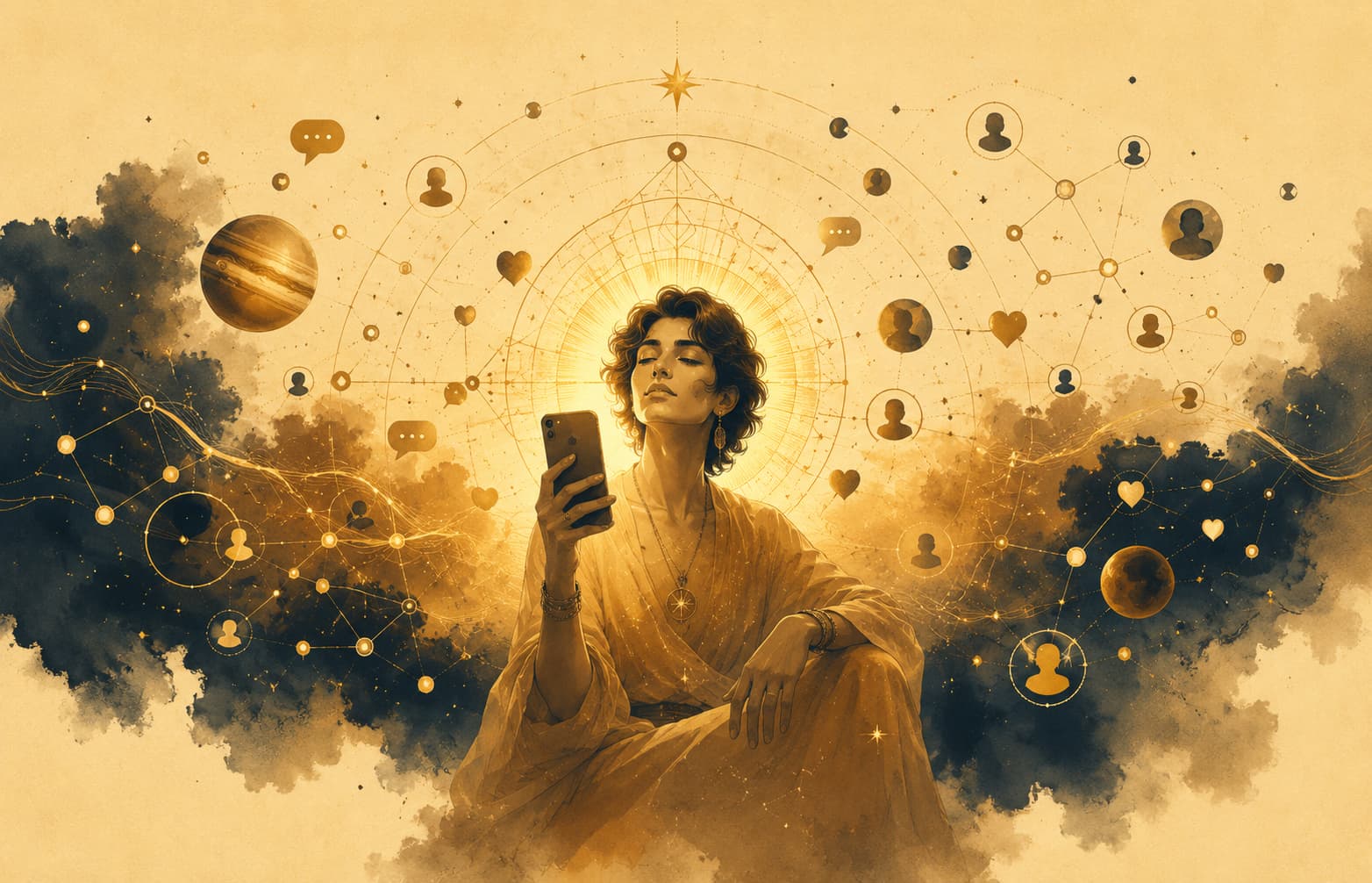
Have you ever felt a strange sense of closeness to a film actor, a cricket star, a YouTuber or an Instagram creator whose real life you will never share? You follow every update, feel genuine happiness when they succeed, and experience disappointment when they face criticism. Sometimes the attachment grows so strong that it begins to shape your mood, your spending or even your sense of identity. This pattern is often called celebrity worship, influencer attachment or, in psychological language, a parasocial relationship. It is the one-sided emotional investment in a person who does not know you exist.
In the modern world of constant digital content, such bonds have become common. Subscription platforms, live streams and carefully curated personal brands create an illusion of intimacy. Some people pay for exclusive access, private messages or virtual companionship. Others project their own hopes, longings and unresolved needs onto these distant figures. Vedic astrology, or Jyotisha, offers a structured way to understand why certain charts are more prone to this pattern. The explanation does not rest on a single planet or house. It arises from the interplay of the 5th and 11th houses, the condition of the Moon, Venus and Rahu, the Arudha Lagna, the Darapada, and the relationships among the lords of the 5th, 7th, 11th and 12th houses.
The same combination can take another relational form in jealousy, possessiveness and controlling behavior.
This article examines those factors in clear, practical terms. It does not claim that astrology alone determines every emotional habit. The complete birth chart, current dashas and real-life circumstances always matter. Yet the classical framework of Jyotisha provides useful language for recognising the planetary signatures behind intense fandom, projection and the search for emotional connection through public personalities.
Key Takeaways
- Emotional investment in unknown public figures often links to a sensitive or afflicted Moon combined with strong Venus or Rahu influence.
- The 5th house governs romantic idealisation, creative admiration and speculative emotional energy. The 11th house rules large social circles, gains through networks and collective hopes.
- Rahu amplifies desire, creates illusion and thrives in the digital realm of screens and distant images.
- Arudha Lagna shows the public image that attracts projection, while Darapada (A7) reflects the perceived partner or idealised relationship figure.
- Links between the 5th, 7th, 11th and 12th lords can turn ordinary admiration into private emotional absorption or paid forms of intimacy.
- A balanced chart may channel the same energy into healthy creative inspiration or community support rather than fixation.
- Remedies focus on strengthening emotional self-awareness, ethical use of time and money, and constructive expression of the relevant planets.
Understanding Emotional Investment in Distant Personalities
Before turning to the chart, it helps to name the experience clearly. Fandom begins as appreciation. A person enjoys an actor’s performance, a creator’s humour or a sportsperson’s skill. Celebrity worship goes further. The admirer begins to feel personal loyalty, protectiveness or even romantic longing. Projection occurs when the admirer unconsciously places their own unmet needs, values or fantasies onto the public figure. The celebrity or influencer becomes a screen for private emotional content.
Paid intimacy adds another layer. Platforms that offer exclusive content, private chats or virtual companionship allow people to purchase a feeling of closeness. The transaction is real, yet the relationship remains one-sided. The creator may never know the individual subscriber. From the Jyotish perspective, this pattern often activates houses of desire, loss of boundaries and gain through large networks.
These behaviours are not new in essence. Ancient stories describe devotees who felt intense personal attachment to kings, poets or spiritual teachers they had never met. What has changed is the speed, volume and commercial packaging of such images. Social media and streaming platforms act as modern amplifiers of the same underlying planetary tendencies.
The Role of the 5th and 11th Houses
In classical Jyotisha the 5th house is known as Putra Bhava. It rules children, creativity, intelligence, mantra, past-life merit and speculative ventures. It also governs the capacity for romantic idealisation and emotional enthusiasm. When a person admires a distant figure with warmth, fantasy and personal investment, the 5th house is usually active. A strong or heavily aspected 5th house can produce vivid inner images of the admired person. The native may daydream about conversations that will never happen or feel genuine emotional reactions to the public figure’s reported experiences.
The 11th house, Labha Bhava, rules gains, elder siblings, large groups of friends, hopes, aspirations and income through networks. In the digital age it naturally extends to online communities, fan groups and follower counts. When the 11th house is connected to the 5th, admiration easily turns into participation in collective fandom. The person gains a sense of belonging by sharing the same emotional focus with thousands of others. Likes, comments and shared memes become modern expressions of 11th-house networking.
An afflicted or over-stimulated 5th-11th axis can produce restlessness. The native may keep seeking new content, new updates or new creators to fill an inner need for stimulation and emotional colour. Conversely, a well-supported axis can channel the same energy into creative work inspired by admired figures, or into constructive community support for artists and athletes.
The lord of the 5th house shows how the person expresses romantic or creative attachment. The lord of the 11th shows how that attachment seeks social validation or material gain. When these two lords exchange signs, aspect each other or sit together, the link between private fantasy and public network becomes tight. In such charts, following influencers can feel almost compulsory.
Moon, Venus and Rahu: The Emotional Drivers
Three grahas stand out in the analysis of celebrity and influencer attachment: the Moon, Venus and Rahu.
The Moon represents the mind, emotional needs, mothering instinct and fluctuating moods. A sensitive, weak or heavily aspected Moon often seeks external sources of comfort and identity. When the Moon receives the influence of Rahu or sits in a sign ruled by Venus, the mind can become fascinated by beauty, glamour and distant images. The person may feel soothed by watching familiar faces on a screen, much as a child feels soothed by a parent’s presence. The difference is that the screen presence never responds as a real parent or friend would.
Venus is the natural significator of love, attraction, arts, luxury, relationships and refined pleasure. A strong Venus can produce genuine aesthetic appreciation. An afflicted or over-emphasised Venus can produce excessive idealisation of beauty and charm. When Venus occupies the 5th, 7th, 11th or 12th house, or when it aspects the Moon, the native may fall into patterns of romantic projection onto public figures. The admired person becomes the living embodiment of Venusian qualities the native longs for in daily life.
Rahu is the north node of the Moon. It represents amplification, illusion, unconventional desire, foreign influences and the hunger for experience that ordinary life does not supply. In the present era Rahu strongly correlates with screens, digital media, sudden fame and the blurring of real and virtual. Rahu’s influence on the Moon or Venus frequently appears in charts of people who develop intense attachments to online personalities. The graha creates a sense that the distant figure holds the key to excitement, identity or emotional fulfilment. Because Rahu is never fully satisfied, the attachment can grow stronger rather than settle into ordinary liking.
When Moon, Venus and Rahu form a tight combination through conjunction, mutual aspect or exchange, the psychological pattern becomes pronounced. The native may experience the public figure as more real or more important than many actual relationships. Spending long hours consuming content, defending the celebrity against criticism, or feeling personal rejection when the influencer changes direction are common expressions of this planetary signature.
Arudha Lagna and the Power of Image
Arudha Lagna, often abbreviated as AL, is the “image” or “maya” lagna calculated from the lagna lord. It shows how the person is perceived by the world and, equally important, how the person perceives the world of public images. A strongly placed Arudha Lagna can make the native highly responsive to the public images of others. The person notices status, presentation and social signalling with unusual intensity.
In the context of celebrity obsession, a prominent Arudha Lagna often indicates that the native is drawn to figures who themselves possess powerful Arudha strength. The admired celebrity or influencer projects a clear, magnetic public image. The native’s own Arudha Lagna resonates with that projection. The result is a feeling of recognition or belonging that has little to do with actual personal contact.
When the Arudha Lagna is connected to the 5th or 11th house, or when its lord joins the Moon or Venus, the attraction to public images intensifies. The native may begin to shape personal identity around the styles, opinions or lifestyles of admired figures. Clothing choices, speech patterns and even moral viewpoints can subtly shift toward those of the favourite creators.
Darapada: The Perceived Partner
Darapada, also called A7, is the Arudha of the 7th house. It represents the image of partnership, the kind of companion the person is drawn to, and the public face of relationship. In classical texts it is used to assess the nature of the spouse or business partner as seen by the world. In modern application it also illuminates the idealised relationship figure that lives in the native’s imagination.
When Darapada is strong or receives the influence of Venus, Moon or Rahu, the native may project partnership longings onto distant personalities. A film star or content creator becomes the imagined companion. The person may feel jealousy toward the celebrity’s real-life partners, or experience genuine emotional pain when the public figure’s relationship status changes. Paid intimacy platforms can activate this same Darapada energy: the subscriber purchases the feeling of being chosen or seen by the idealised figure.
If Darapada sits in the 5th or 11th house from the lagna or from the Arudha Lagna, the projection tends to be more creative and social. If it occupies the 12th, the attachment may take a more private, secretive or escapist form. The native consumes content late at night, spends money quietly, or feels a sense of private communion that others do not share.
Links Between the 5th, 7th, 11th and 12th Lords
The most revealing configurations often involve the lords of four houses: the 5th (romance and idealisation), the 7th (partnership), the 11th (networks and gains) and the 12th (loss of boundaries, isolation, bed pleasures and expenditure).
When the 5th lord and 7th lord are connected, romantic fantasy easily mixes with partnership longing. The native may treat a distant celebrity as a potential life partner in imagination. When the 5th or 7th lord joins the 11th lord, the fantasy finds a social outlet through fan communities and digital networks. When any of these lords connect with the 12th lord, the attachment moves into private expenditure, secret consumption or a sense of emotional isolation that the online figure seems to fill.
A classic pattern appears when the 5th lord occupies the 11th or 12th, the 11th lord occupies the 5th or 12th, and Venus or Rahu aspects the combination. The native gains emotional stimulation and sometimes material cost through large-scale, one-sided relationships conducted via screens. Another pattern occurs when the 7th lord sits in the 12th and receives Rahu’s aspect: the person may prefer virtual or paid forms of intimacy over ordinary face-to-face relating.
These links do not automatically produce unhealthy obsession. They simply show where the emotional energy is likely to flow. If the planets involved are strong, well-aspected and supported by benefic influences, the same energy can produce inspired creative work, generous support for artists, or meaningful participation in constructive online communities. If the planets are weak, combust, or afflicted by malefics, the energy more easily turns into compulsive checking, financial overspending or emotional dependence.
How the Pattern Appears in Daily Life
A person with a sensitive Moon and strong 5th-11th axis may begin the day by checking the latest posts of a favourite creator. Mood rises or falls according to the content. Criticism of the celebrity feels like a personal attack. Money is spent on merchandise, paid subscriptions or event tickets that create a sense of closeness. In extreme cases the native may neglect real friendships or family time because the online figure feels more emotionally reliable.
Another common expression is the search for identity through association. The native adopts the language, values or aesthetic of the admired figure. When the public figure changes direction or faces scandal, the native experiences confusion or betrayal. This is the 5th-house idealisation meeting the 11th-house group identity and the Rahu-driven illusion of permanence.
Paid intimacy platforms highlight the 12th-house side of the pattern. The transaction is private. The content is often consumed in solitude. The emotional reward is temporary yet compelling. Charts that show 12th-lord connection to Venus or the 7th house frequently display this tendency. The native is not necessarily seeking physical intimacy; the deeper drive is often emotional recognition and the temporary relief of loneliness.
Constructive Possibilities
The same planetary factors that can produce fixation can also support healthy admiration and creative growth. A well-placed Venus and Moon can generate genuine aesthetic appreciation that inspires the native’s own artistic efforts. A strong 5th house can turn admiration into skill development: the person studies the techniques of a favourite musician or writer and improves personal craft. A positive 11th house can lead to community building, fan clubs that organise charity, or professional networking through shared interests.
Rahu’s influence, when consciously directed, can produce innovative content creation or the ability to understand digital trends. The native who recognises the planetary pattern may choose to become a creator rather than only a consumer, channeling the same hunger for visibility and connection into original work.
Challenges and Imbalanced Expressions
Difficult expressions appear when the planets lack strength or receive heavy affliction. Compulsive checking of social media, anxiety when content is delayed, financial strain from repeated subscriptions, and emotional withdrawal from real-life relationships are common signs. The native may defend the public figure against all criticism, even when the criticism is factual. Identity can become so intertwined with the admired figure that personal decision-making suffers.
In some charts the pattern contributes to delayed or difficult real relationships. The idealised image set by celebrities or influencers becomes an impossible standard. Ordinary partners cannot compete with carefully edited public personas. The 7th house and Darapada then show dissatisfaction or repeated disappointment.
Factors That Modify the Result
No single placement decides the outcome. Several modifying factors always require examination:
- Dignity and strength of the Moon, Venus and Rahu.
- Condition of the 5th and 11th lords in the Rashi chart and in the relevant divisional charts, especially the Navamsha and Dasamsha.
- Current Mahadasha and Antardasha. Periods of the Moon, Venus, Rahu or the 5th/11th lords often activate the pattern more strongly.
- Transits of Rahu, Saturn or Jupiter over the natal Moon, Venus or the 5th/11th axis.
- Overall chart balance. A strong lagna and supportive Jupiter can provide the discrimination needed to keep admiration healthy.
- Real-life circumstances such as isolation, unfulfilled creative needs or lack of close friendships. Astrology shows tendency; environment shapes expression.
How to Examine This Theme in a Birth Chart
A practical sequence for chart analysis is as follows:
- Assess the Moon’s sign, house, aspects and dignity. Note any connection to Venus or Rahu.
- Examine Venus: its house, sign, aspects and relationship to the 5th, 7th, 11th and 12th houses.
- Locate Rahu and note its house, sign and aspects, especially to the Moon, Venus or the 5th/11th axis.
- Calculate Arudha Lagna and observe its links to the Moon, Venus or public-image houses.
- Calculate Darapada (A7) and see whether it connects to the 5th, 11th or 12th.
- Study the lords of the 5th, 7th, 11th and 12th for mutual connections, exchanges or conjunctions.
- Check the current dasha sequence and relevant transits.
- Review the Navamsha for deeper relationship and idealisation patterns.
- Weigh the overall strength of the lagna and the presence of stabilising influences such as Jupiter or a strong Saturn that can provide realism.
Only after these steps can an astrologer offer a nuanced reading. A single strong Rahu does not equal obsession. The full picture of emotional needs, idealisation capacity and boundary strength must be considered.
Common Misconceptions
One frequent misconception is that only people with Rahu in the 5th or 11th become fans. In reality the pattern can arise from many combinations that activate emotional idealisation and network participation. Another misconception is that celebrity attachment is always unhealthy. Admiration can be a source of inspiration, community and even livelihood. The question is whether the attachment remains flexible and reality-based or becomes rigid and consuming.
Some readers assume that a strong Venus guarantees romantic happiness with real partners and therefore cannot produce distant projection. Venus can express through many channels. When real-life relationship opportunities are delayed or restricted, Venusian energy readily seeks alternative outlets, including public figures.
Finally, it is a mistake to treat the pattern as purely modern. Classical texts describe intense devotion to distant kings, poets and spiritual personalities. The digital age has simply provided more efficient delivery of images and more commercial packaging of intimacy.
Traditional Remedies and Practical Guidance
Remedies in Jyotisha are meant to support greater awareness and healthier expression, not to erase planetary influence. For patterns involving Moon, Venus and Rahu, the following approaches are traditionally recommended:
- Regular, quiet time away from screens to strengthen the Moon’s capacity for inner contentment. Simple breathing practices or short periods of sitting in nature help.
- Mantra or prayer connected with the Moon or Venus, chosen according to the native’s tradition and chart. Consistent, respectful practice matters more than elaborate ritual.
- Charity or service linked to the arts, education of children, or support for those who experience loneliness. Such acts redirect 5th and 11th house energy outward in constructive ways.
- Conscious budgeting of time and money spent on digital content. Setting clear limits reduces the 12th-house leakage of resources.
- Cultivation of real-life creative hobbies or local community activities that satisfy the same need for stimulation and belonging.
- Honest reflection on what emotional needs the public figures are being asked to fulfil. Journaling or conversation with a trusted friend can bring clarity.
Gemstones, elaborate yagyas or expensive remedial packages should never be adopted casually. Suitability depends on the complete chart, the native’s health and financial situation, and guidance from a knowledgeable practitioner. Simple behavioural and devotional practices usually provide the most reliable support.
Conclusion
The tendency to become emotionally invested in celebrities, influencers and content creators is neither mysterious nor purely modern. Vedic astrology locates its roots in the 5th house of idealisation, the 11th house of networks and collective hopes, the emotional nature of the Moon, the attractive power of Venus, and the amplifying, illusion-creating force of Rahu. Arudha Lagna shows the magnetism of public image. Darapada reveals the projected partnership figure. Links among the 5th, 7th, 11th and 12th lords explain how private longing, social belonging and expenditure combine.
Readers following this theme into intimacy and partnership may also recognize friendship breakups and betrayal.
These factors describe tendency, not destiny. A chart that contains the relevant combinations may produce healthy inspiration, creative productivity and meaningful community participation when the planets are strong and the native cultivates self-awareness. The same combinations may produce compulsive consumption, financial strain or emotional dependence when the planets are weak or the life circumstances amplify isolation.
The value of the Jyotish lens is that it offers language for recognising the pattern and practical points of focus for bringing it into greater balance. Admiration need not become absorption. Digital connection need not replace human presence. By understanding the planetary signatures at work, a person can choose how to engage with the vivid, carefully crafted images that fill modern screens.
Frequently Asked Questions
1. Can a single planet cause celebrity obsession?
No. The pattern usually involves a combination of the Moon’s sensitivity, Venusian idealisation, Rahu’s amplifying effect, and activation of the 5th and 11th houses. Isolated placements rarely produce the full behaviour.
2. Does a strong 5th house always mean intense fandom?
A strong 5th house increases the capacity for emotional enthusiasm and idealisation. Whether that energy focuses on celebrities depends on additional links to the 11th house, Rahu, and the overall chart context.
3. How does social media specifically relate to Rahu?
Rahu correlates with illusion, sudden visibility, foreign or unconventional influences, and experiences that transcend ordinary limits. Digital platforms deliver precisely those qualities: edited images, rapid fame, and the sense of closeness without physical presence.
4. Is paid intimacy always shown by the 12th house?
The 12th house frequently appears because it rules private expenditure, isolation and forms of pleasure that remain hidden. However, the 7th house, Venus and Darapada also participate when the emotional content is relationship-oriented.
5. Can the pattern change during different dashas?
Yes. Periods of the Moon, Venus, Rahu or the lords of the 5th, 7th, 11th and 12th houses often intensify the theme. Supportive transits or a shift into a more grounded dasha can reduce the intensity.
A closely related partnership pattern is explored in polyamory and open relationships.
6. Should someone with these placements avoid following influencers entirely?
Complete avoidance is rarely necessary or realistic. The more useful approach is conscious engagement: clear limits on time and money, awareness of emotional triggers, and parallel investment in real-life relationships and creative outlets.
7. Do these combinations appear in the charts of the celebrities themselves?
Often yes. Strong Arudha Lagna, prominent Venus or Rahu, and connections between the 5th, 10th and 11th houses frequently appear in charts of people who attract large-scale public projection. The same planetary language describes both the admirer and the admired.
8. Is this analysis the same for film stars and online creators?
The core planetary factors remain similar. Online creators may show stronger Rahu and 11th-house emphasis because their medium is digital and network-based, while traditional film or sports celebrities may emphasise Venus, the 10th house and public image through Arudha more prominently. The underlying emotional mechanics of projection are shared.
At a collective level, similar symbolism appears in internet fame and social media virality.
About the author
Vikram Iyer
Contributing Editor, Spirituality and Society
Vikram Iyer writes about spirituality, belief, remedies and the social expression of planetary symbolism. His interests include Jupiter and Rahu, the ninth house, political life, public authority and the ethics of spiritual practice. He approaches Jyotish as a tradition that can illuminate faith and collective behavior without demanding conformity or surrendering critical thought.
Read the full bioContinue reading
Combinations for Addiction in Vedic Astrology: Alcohol, Smoking, Drugs and More
Mental Health & Vedic Astrology: Everything you should know