
Left-Wing vs Right-Wing Politics in Vedic Astrology: Combinations That Shape Political Inclination
Discover how planetary combinations, houses, yogas and nakshatras in Vedic astrology may indicate left-wing, centrist or right-wing political inclination. A detailed Jyotisha guide to ideological tendencies in the birth chart.
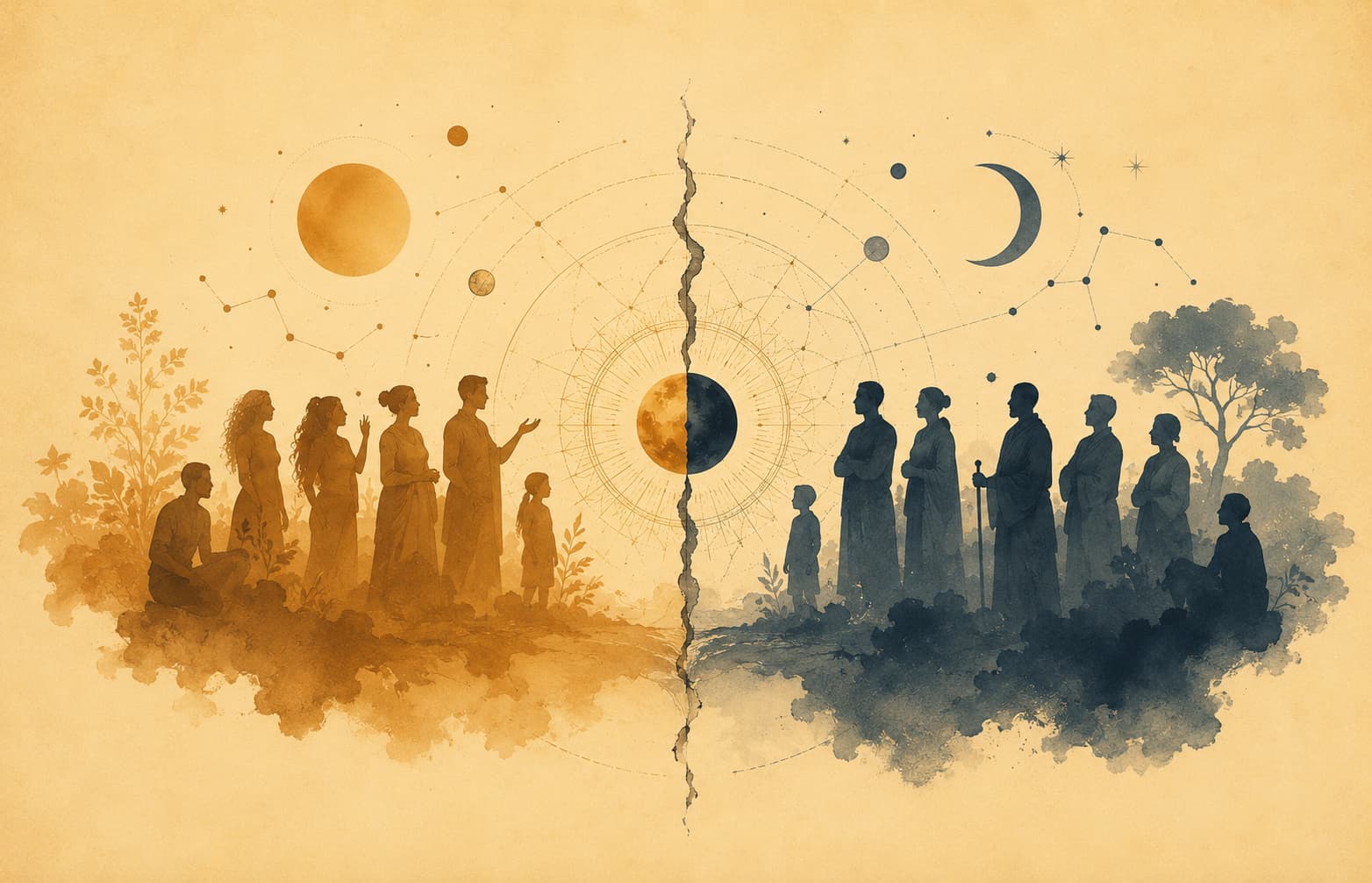
Have you ever sat with friends who share almost identical family backgrounds, education and economic status, yet hold sharply different views on social change, economic policy or the role of tradition? One person argues strongly for rapid reform and redistribution. Another prefers measured continuity and institutional order. A third seeks a middle path that borrows from both sides. Modern political science explains such differences through upbringing, media exposure and personal experience. Vedic astrology adds another layer of inquiry: the possibility that certain planetary combinations in the birth chart may predispose a person toward particular ideological leanings.
This article explores that possibility carefully. It does not claim that any single yoga forces a person into a political party, nor that the chart overrides free will, culture or education. Instead it examines the classical significations of planets, houses and nakshatras that experienced Jyotisha practitioners often associate with progressive, centrist or traditional orientations. By the end you will understand the main combinations traditionally linked with left-wing, central and right-wing inclinations, the factors that strengthen or weaken them, and a practical method for examining these themes in any complete kundli.
This same planetary logic can shape status and society, as explored in planetary combinations for political careers.
Key Takeaways
- Political inclination in Jyotisha is inferred mainly from the 9th house (beliefs and dharma), 11th house (social groups and gains), 10th house (public role) and the condition of Mercury, Jupiter, Saturn, Rahu and the Moon.
- Strong Saturn, Sun and Mars influences with traditional sign and nakshatra support often correlate with preference for hierarchy, continuity and structured authority.
- Prominent Rahu, Moon, Mercury and Venus combinations with fluid or unconventional placements more frequently associate with reformist, egalitarian or progressive outlooks.
- Centrist leanings commonly arise when benefics and malefics balance each other, or when Jupiter and Mercury form harmonious links without extreme nodal or Saturnine pressure.
- No combination operates in isolation. Dasha periods, current transits, divisional charts and the overall strength of the lagna and its lord must always be considered.
- Astrology describes tendencies, not destinies. Cultural context, education and personal choice remain decisive.
Understanding Political Inclination Through Jyotisha
In classical Jyotisha the modern labels “left-wing,” “centre” and “right-wing” do not appear. These terms belong to post-Enlightenment political vocabulary. What the tradition does provide is a rich language for describing a person’s relationship with authority, change, social order, collective welfare and personal dharma. When these themes are examined together, patterns emerge that many contemporary astrologers map onto the familiar political spectrum.
Left-wing orientations, in the broad sense used here, emphasise equality, reform, collective welfare and willingness to disrupt established structures. Right-wing orientations emphasise continuity, hierarchy, institutional stability and the preservation of tested norms. Centrist orientations seek pragmatic balance, incremental adjustment and avoidance of ideological extremes.
The birth chart does not vote. It does, however, describe the mental and emotional filters through which a person evaluates social questions. The same chart factors that shape career choices, relationship patterns or spiritual outlook can also colour political preference.
Core Planetary Significations Relevant to Ideology
Before examining specific combinations it is useful to recall the natural significations of the grahas most frequently involved in ideological analysis.
Sun
Represents authority, leadership, the state, paternal figures and the principle of ordered hierarchy. A well-placed Sun often supports respect for established institutions and decisive leadership. When afflicted or weakly placed it may produce either authoritarian rigidity or rebellious opposition to authority.
Moon
Signifies the public mind, emotional response to collective needs, mother, masses and fluctuating popular sentiment. A strong Moon can incline a person toward policies that prioritise social welfare and emotional security of large groups. An unstable Moon may produce populist volatility.
Mars
Governs courage, conflict, reform through force, military and assertive action. Mars can fuel both revolutionary zeal and defensive conservatism, depending on the houses it rules and the signs it occupies.
Mercury
Rules intellect, analysis, communication, debate and adaptability. Mercury is rarely partisan by nature. Its influence tends to favour reasoned argument, policy detail and pragmatic adjustment. When linked with Rahu it can support radical intellectual positions; when linked with Saturn it supports systematic, traditional reasoning.
Jupiter
Signifies dharma, ethics, expansion, teaching and inclusive growth. Jupiter can support both progressive humanitarian ideals and traditional moral frameworks. Its sign and house placement usually decide which expression dominates.
Venus
Represents harmony, arts, relationships, comfort and aesthetic values. Venus often softens ideological edges and supports policies that increase social ease and cultural openness. In certain combinations it aligns with liberal social attitudes.
Saturn
Governs structure, discipline, hierarchy, labour, time-tested systems and the weight of tradition. Strong Saturn frequently correlates with preference for orderly continuity, respect for seniority and scepticism toward rapid untested change.
Rahu
Amplifies desire for the unconventional, foreign ideas, disruption of existing norms and mass movements. Rahu is the classic indicator of radical or reformist energy. Its results depend heavily on the sign, house and planetary associations.
Ketu
Points toward detachment, spiritual isolation and rejection of worldly systems. Ketu can produce either apolitical withdrawal or extreme traditionalist or anarchist positions, depending on the rest of the chart.
These natural meanings are only starting points. Functional status according to the lagna, dignity, aspects and dasha periods modify every indication.
House Foundations of Political Outlook
Four houses form the primary framework for ideological analysis.
Ninth House (Dharma Bhava)
This house rules higher beliefs, philosophy, ethical frameworks, long-distance travel of ideas and the person’s relationship with tradition versus innovation. The ninth lord and planets placed in the ninth house colour the entire ideological orientation. A ninth house occupied by Saturn or the Sun often supports conservative or traditionalist views. Rahu or Mercury in the ninth can favour progressive or reformist philosophies.
Eleventh House (Labha Bhava)
The eleventh house governs social networks, groups, gains from collective activity and aspirations. Strong eleventh-house activity frequently indicates active engagement with political or social movements. The nature of the eleventh lord and its associations reveal whether the person is drawn toward established organisations or disruptive collectives.
Tenth House (Karma Bhava)
Public role, career and reputation sit here. When the tenth house or its lord connects with the ninth or eleventh, political involvement becomes more likely. The quality of that involvement still depends on the planets involved.
Third House (Sahaja Bhava)
Communication of ideas, courage of conviction and younger sibling-like peer groups reside here. Mercury or Mars linked with the third house can produce effective political communicators or activists.
Secondary houses such as the sixth (conflict and service) and the twelfth (isolation or foreign influence) add further colour when strongly activated.
Combinations Traditionally Associated with Right-Wing Inclination
Right-wing leanings, understood as preference for hierarchy, continuity, institutional order and measured change, often appear when the following patterns are present and reasonably strong.
Saturn as Key Indicator
Saturn ruling or occupying the ninth house, especially in its own signs Capricorn or Aquarius, or in exaltation in Libra, frequently supports respect for established structures. When Saturn also aspects the lagna or the Moon, the person tends to value discipline, seniority and long-term stability over rapid social engineering.
Sun-Saturn or Sun-Mars Combinations
A strong Sun connected with Saturn or Mars, particularly in the ninth, tenth or eleventh houses, often produces leadership that defends existing order. The person may feel that authority, when exercised responsibly, protects society better than constant upheaval.
Jupiter in Traditional Dignity with Saturn Support
Jupiter in Sagittarius or Pisces, or well-placed in the ninth house, can support ethical traditionalism when it receives aspects from Saturn. The combination of Jupiter’s dharma with Saturn’s structure often favours continuity of cultural and institutional norms.
Mars in Its Own or Exalted Signs Influencing the Ninth or Tenth
Mars in Aries, Scorpio or Capricorn, when linked with the ninth house, can produce assertive defence of national or cultural identity. The same Mars can appear in left-leaning charts, but the presence of strong Saturn usually channels the energy toward protective rather than revolutionary expression.
Nakshatra Support
Nakshatras ruled by Saturn (Pushya, Anuradha, Uttara Bhadrapada) or by the Sun (Krittika, Uttara Phalguni, Uttara Ashadha) when occupied by the ninth lord or the Moon often reinforce traditionalist leanings. These lunar mansions emphasise order, ritual continuity and measured authority.
Hypothetical Example
Consider a person with Capricorn lagna, Saturn in the ninth house in Virgo, Sun in the tenth house in Libra, and Jupiter in the eleventh house in Scorpio receiving Saturn’s aspect. The chart shows strong structural discipline (Saturn), public authority (Sun in tenth), and ethical frameworks shaped by hierarchical thinking. Such a native may feel most comfortable with policies that strengthen institutions, reward long-term contribution and resist sudden redistribution that appears to undermine established hierarchies. The final expression still depends on dashas and the condition of Mercury and the Moon.
Combinations Traditionally Associated with Left-Wing Inclination
Left-wing leanings, understood as preference for equality, reform, collective welfare and willingness to challenge established hierarchies, commonly appear with the following patterns.
Rahu as Primary Catalyst
Rahu occupying or aspecting the ninth house, or the ninth lord placed with Rahu, frequently indicates attraction to unconventional or foreign-derived ideologies. Rahu amplifies dissatisfaction with the status quo and appetite for systemic change. When Rahu also connects with the Moon or Mercury, the progressive orientation gains emotional or intellectual force.
Moon-Mercury or Moon-Venus Combinations
A strong Moon linked with Mercury or Venus, especially in the ninth or eleventh houses, often supports policies oriented toward social welfare, emotional security of large groups and cultural openness. The Moon’s sensitivity to collective mood combines with Mercury’s analytical capacity or Venus’s desire for harmony to favour reformist agendas.
Mercury-Rahu or Mercury-Jupiter in Fluid Signs
Mercury joined with Rahu in Gemini, Virgo or Aquarius can produce sharp intellectual critique of traditional structures. When Jupiter also participates without heavy Saturn influence, the critique often takes an expansive, inclusive form rather than a purely destructive one.
Venus in Strength Influencing the Ninth or Eleventh
Venus in Taurus, Libra or Pisces, or well-placed in the ninth house, softens ideological rigidity and supports social policies that increase comfort, cultural diversity and relational ease. In combination with Rahu or a progressive Moon, Venus can align with liberal social attitudes.
Nakshatra Support
Nakshatras ruled by Rahu (Ardra, Swati, Shatabhisha) or by Mercury (Ashlesha, Jyeshtha, Revati) when occupied by key ideological planets frequently reinforce reformist or unconventional outlooks. These mansions favour investigation, disruption of norms and intellectual exploration.
Hypothetical Example
Imagine a Cancer lagna with Rahu in the ninth house in Pisces, Moon in the eleventh house in Taurus with Mercury, and Venus in the tenth house in Aries. The ninth-house Rahu introduces unconventional philosophical leanings. The Moon-Mercury combination in the eleventh supports communication of welfare-oriented ideas within social groups. Venus in the tenth brings public expression of values centred on harmony and openness. Such a chart may predispose the native toward policies that prioritise redistribution, social inclusion and reform of traditional hierarchies. Again, dasha timing and the strength of Saturn will decide how forcefully these tendencies express.
At a collective level, similar symbolism appears in authoritarian and libertarian political tendencies.
Combinations Associated with Centrist or Balanced Inclination
Centrist leanings arise less from a single dominant planet and more from equilibrium among competing influences.
Jupiter-Mercury Harmony Without Extreme Nodal or Saturnine Pressure
When Jupiter and Mercury form a supportive relationship (conjunction, mutual aspect or exchange) and neither is heavily afflicted by Rahu or Saturn, the intellect tends toward measured, pragmatic evaluation of policies. The person examines both tradition and reform and prefers incremental adjustment.
Balanced Ninth and Eleventh Lords
If the ninth lord and eleventh lord occupy friendly signs or receive mutual aspects without severe affliction, the native often seeks practical gains that do not require radical ideological commitment. Policy is evaluated more by results than by purity of doctrine.
Sun and Moon in Moderate Strength with Benefic Support
A reasonably strong Sun and Moon, neither combust nor heavily afflicted, supported by Jupiter or Venus, often produce leadership that values both authority and popular welfare. The result is frequently a centrist or consensus-seeking orientation.
Saturn and Rahu Both Present but Tempered
When Saturn and Rahu both influence the ninth or eleventh houses yet are themselves aspected by Jupiter or Venus, the native may feel the pull of both tradition and reform. The final stance often becomes pragmatic synthesis rather than pure ideology.
Nakshatra Support
Nakshatras ruled by Jupiter (Punarvasu, Vishakha, Purva Bhadrapada) or by Venus (Bharani, Purva Phalguni, Purva Ashadha) when occupied by the ninth lord frequently favour balanced, ethical and inclusive approaches that avoid extremes.
Hypothetical Example
A Taurus lagna with Jupiter in the ninth house in Capricorn, Mercury in the tenth house in Aquarius, Saturn in the eleventh house in Pisces receiving Jupiter’s aspect, and Rahu in the third house. Jupiter in the ninth provides ethical grounding. Mercury in the tenth supports analytical public communication. Saturn in the eleventh is tempered by Jupiter, producing structured yet inclusive group aspirations. Rahu in the third adds innovative communication without dominating the belief system. The overall picture supports a centrist who values both institutional stability and thoughtful reform.
Factors That Modify or Cancel Apparent Tendencies
No combination operates in isolation. The following factors regularly alter the picture.
Functional Status According to Lagna
A planet that is a natural malefic may become a functional benefic for a particular lagna and therefore express more constructively. Conversely, a natural benefic can become a functional malefic and introduce friction into the ideological domain.
Dignity and Strength
Exaltation, own sign, friendly sign, debilitation, combustion and planetary war all change the quality of expression. A debilitated Saturn may produce either excessive rigidity or complete rejection of structure, depending on other factors.
Aspects and Conjunctions
A single powerful aspect from Jupiter can soften an otherwise harsh Saturnine combination. A Rahu-Ketu axis cutting across the ninth and third houses can inject radicalism into an otherwise traditional chart.
Dasha and Antardasha
Ideological expression often intensifies during the dasha of the ninth lord, the eleventh lord, Rahu, Saturn or the planet most strongly linked with the belief system. A person may appear more progressive during a Rahu period and more traditional during a Saturn period even if the natal chart contains both influences.
Current Transits (Gochar)
Saturn or Jupiter transiting the ninth or eleventh house can temporarily emphasise certain themes. Rahu or Ketu transiting these houses may produce periods of ideological restlessness or detachment.
Its relationship with belief and spiritual practice becomes clearer in faith, atheism and the ninth house.
Divisional Charts
The Navamsha (D9) and Dasamsha (D10) should be examined for confirmation. A progressive combination in the Rashi chart that is contradicted in the Navamsha may express only weakly or in limited areas of life.
Overall Chart Promise
If the lagna and its lord are weak, or if the chart shows strong spiritual detachment (heavy Ketu influence on the lagna or Moon), political engagement itself may remain minimal regardless of ideological combinations.
How to Examine Political Inclination in a Birth Chart
A practical sequence helps keep analysis systematic.
- Note the lagna and the condition of the lagna lord. Strength here supports clear self-expression of whatever ideological leanings exist.
- Examine the ninth house, its lord, and any planets occupying or aspecting it. This is the primary indicator of belief systems.
- Study the eleventh house and its lord for social-group orientation and collective aspirations.
- Check the tenth house for public expression of those beliefs.
- Assess the relative strength and mutual relationships of Saturn, Rahu, Jupiter, Mercury, Moon and Sun.
- Note the nakshatras of the ninth lord, Moon and any key ideological planets.
- Review the current and upcoming dashas for periods when these themes are likely to become more prominent.
- Cross-check relevant divisional charts, especially D9 and D10.
- Consider the cultural and educational background of the native. Astrology describes predisposition; environment shapes final expression.
This sequence prevents over-reliance on any single placement and keeps interpretation grounded in the complete chart.
Common Misconceptions
Several misunderstandings frequently appear in discussions of astrology and politics.
Misconception 1: One planet determines political party
No single planet or yoga forces membership in any political organisation. Charts show tendencies that interact with free will, education and historical context.
Misconception 2: Left-wing equals Rahu and right-wing equals Saturn in every case
While these associations are common, many charts contain both influences. The relative strength, dignity and house placement decide which theme dominates, and many natives integrate both.
Misconception 3: Astrology can predict election results for individuals
Jyotisha may describe a person’s ideological leanings and periods of heightened political interest. Predicting specific electoral outcomes requires far more data and is outside the scope of ordinary birth-chart analysis.
Misconception 4: Progressive or traditional leanings are morally superior or inferior
Astrology describes patterns of thought and preference. It does not rank political orientations as spiritually higher or lower.
Misconception 5: A strong ninth house guarantees political career
The ninth house indicates beliefs. Political career requires additional strength in the tenth house, eleventh house and relevant dashas.
Practical Guidance for Readers
If you wish to explore these themes in your own chart, begin with a reliable birth time and a properly calculated kundli using a standard ayanamsha. Identify the ninth and eleventh houses first. Then observe the planets that influence them most strongly. Ask yourself whether the chart shows greater weight on structural continuity (Saturn, Sun, traditional nakshatras) or on reform and collective welfare (Rahu, Moon, Mercury, progressive nakshatras). Note any balancing influences that point toward the centre.
Remember that the same chart factors also influence career, relationships and spiritual life. Political inclination is only one expression among many. When the chart shows strong ideological combinations, the native often benefits from conscious reflection: examining personal biases, listening to opposing views, and grounding political energy in practical service rather than pure abstraction.
Traditional remedial measures, when desired, focus on strengthening the constructive side of the relevant planets rather than attempting to change ideological orientation. Charity, disciplined study, ethical conduct and respect for teachers and elders are classical recommendations that support clarity of mind regardless of political preference.
Conclusion
Vedic astrology does not assign political parties. It describes the mental and emotional architecture through which a person evaluates questions of authority, change, equality and continuity. Combinations involving Saturn, the Sun and traditional nakshatras frequently support right-leaning or continuity-oriented views. Combinations involving Rahu, the Moon, Mercury and progressive nakshatras more often support left-leaning or reform-oriented views. Balanced Jupiter-Mercury influences and tempered mutual aspects frequently produce centrist or pragmatic orientations.
Every indication remains provisional until the complete chart, including lagna strength, dashas, transits and divisional charts, is examined. Cultural background, education and personal choice continue to shape the final expression. Used with humility and technical care, Jyotisha offers a nuanced language for understanding why individuals who share similar external circumstances can nevertheless differ so markedly in their political instincts.
Frequently Asked Questions
Can a single yoga determine whether someone is left-wing or right-wing?
No. Political inclination emerges from the interaction of several factors, primarily the ninth and eleventh houses, the condition of Saturn, Rahu, Jupiter, Mercury and the Moon, and the overall chart strength. Isolated yogas are insufficient.
Does a strong Saturn always produce conservative views?
Not always. Saturn’s functional status, dignity, aspects and the presence of counterbalancing influences such as Rahu or a progressive Moon can modify or even reverse the expected expression. Context is essential.
Can political views change during different dashas?
Yes. Many people experience shifts in emphasis during the dasha of Rahu versus the dasha of Saturn, or during the period of the ninth lord. The natal predisposition remains, but its intensity and public expression can vary.
Is the Moon sign more important than the lagna for political analysis?
Both matter. The lagna shows the overall self-expression and capacity for public engagement. The Moon shows emotional response to collective issues. The ninth house and its lord usually carry the greatest weight for belief systems themselves.
Do outer planets such as Uranus or Pluto play a role in Vedic political analysis?
Classical Jyotisha does not use Uranus, Neptune or Pluto. Modern practitioners who incorporate them treat them as additional indicators of radical change or collective psychology, but traditional analysis relies on the seven grahas plus Rahu and Ketu.
Can astrology predict which political party a person will support?
Astrology can describe ideological tendencies and periods of heightened interest. Specific party affiliation depends on the available options in a given country and historical moment, as well as personal choice. Prediction of party membership is not a reliable or appropriate use of the chart.
What if the chart shows strong influences for both left and right?
Such charts are common. The native often experiences internal debate or adopts a nuanced, issue-by-issue approach. Centrist or independent positions frequently emerge from precisely this kind of tension.
Should remedies be used to change political inclination?
Traditional remedies aim at clarity, ethical conduct and constructive expression of planetary energy. They are not designed to convert a person from one political orientation to another. Reflection, study and open dialogue remain the most practical tools for refining one’s own views.
About the author
Vikram Iyer
Contributing Editor, Spirituality and Society
Vikram Iyer writes about spirituality, belief, remedies and the social expression of planetary symbolism. His interests include Jupiter and Rahu, the ninth house, political life, public authority and the ethics of spiritual practice. He approaches Jyotish as a tradition that can illuminate faith and collective behavior without demanding conformity or surrendering critical thought.
Read the full bioContinue reading

Vedic Astrology of Internet Fame: Virality, Influencers and Micro-Celebrity
Planetary Combinations for Political Career in Vedic Astrology