Sun and Moon in Vedic Astrology: Complete Guide to Surya and Chandra
Discover the complete meaning of Sun (Surya) and Moon (Chandra) in Vedic astrology. Learn their significations, house and sign effects, chart analysis methods, conjunctions, and traditional remedies in this detailed guide.
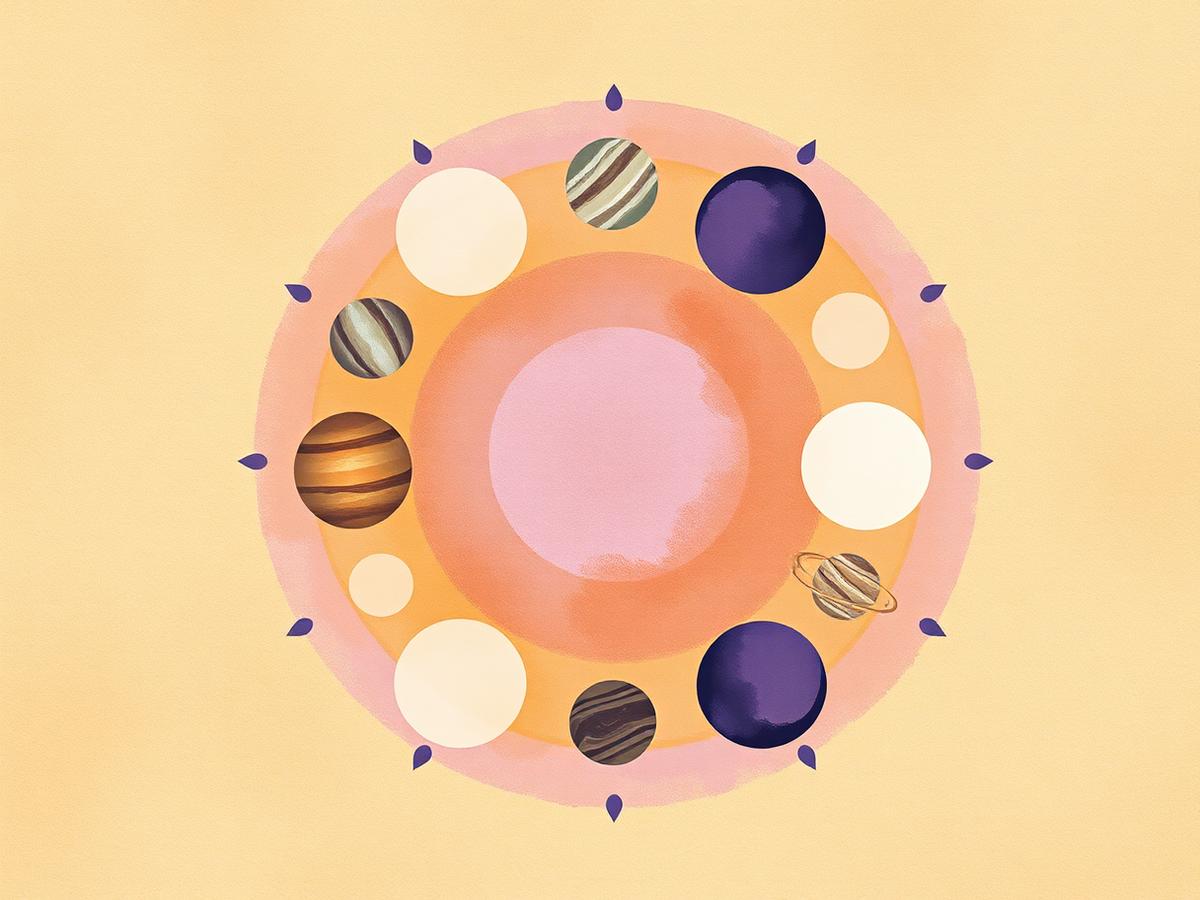
Many people first look at their Sun sign when they begin exploring astrology. In Vedic tradition the picture is different. The Sun and the Moon together form the foundation of the birth chart. One shows the steady light of the soul and outer identity. The other reflects the changing mind and emotional responses that colour every experience.
This article explains both luminaries in clear, practical terms. You will learn their classical meanings, how astrologers examine them in a Kundli, the effects of their placements in signs and houses, the significance of their conjunction, factors that modify results, and traditional ways of strengthening them. The discussion remains grounded in established Jyotisha principles and avoids absolute predictions. Full chart analysis is always required before drawing personal conclusions.
This becomes clearer when placed beside the planetary analysis in Gulika and Mandi.
Key Takeaways
- Surya represents the soul, vitality, father, authority and sense of purpose.
- Chandra represents the mind, mother, emotions, memory and general well-being.
- The Sun is exalted in Aries and debilitated in Libra. The Moon is exalted in Taurus and debilitated in Scorpio.
- Results depend on house placement, sign dignity, aspects, conjunctions, lordship and the current Dasha.
- A strong Sun supports confidence and leadership. A strong Moon supports emotional stability and mental clarity.
- The complete birth chart, including Lagna and relevant divisional charts, must be examined for accurate interpretation.
Meaning and Basic Concept of Surya and Chandra
In Vedic astrology the Sun is called Surya or Aditya. It is the visible source of light and life. Classical texts treat it as the significator of the Atma, the individual soul. It also indicates the father, government, authority figures, vitality, the heart, the right eye, bones and the capacity to take responsibility.
The Moon is called Chandra or Soma. It rules the Manas, the mind. It shows how a person receives experience, processes emotion, forms memory and responds to the environment. Chandra is the natural significator of the mother, women in general, public interaction, fluids, the left eye and overall comfort or discomfort in daily life.
The two luminaries work as a pair. Surya provides the fixed centre of identity. Chandra provides the reflective surface that experiences the world. When both are well placed and mutually supportive, a person tends to feel clear about purpose and reasonably steady in mood. When one is weak or the two are in tension, the outer drive and inner feeling can pull in different directions.
Vedic astrology uses the sidereal zodiac. The positions of Surya and Chandra are calculated with an Ayanamsha correction so that the signs match the fixed stars rather than the tropical seasons used in Western astrology.
Astrological Significance of the Sun
Surya is considered a natural malefic in the technical sense that its energy is hot, dry and intense. It burns away what is unnecessary and demands clarity. This does not mean it is harmful. A well-placed Sun gives dignity, leadership capacity, physical vitality and the ability to stand upright in one’s own life.
Key classical associations include:
- Soul and sense of self
- Father and paternal lineage
- Authority, government and positions of responsibility
- Vitality, immunity and life force
- Heart, spine, right eye and bones
- Gold, wheat, temples and physicians
Surya rules the sign Leo (Simha). Its Moolatrikona spans the first twenty degrees of Leo. It reaches highest exaltation at ten degrees of Aries (Mesha) and deepest debilitation at ten degrees of Libra (Tula).
In the natural friendship scheme, Surya’s friends are Chandra, Mars and Jupiter. Mercury is neutral. Venus and Saturn are enemies. These relationships influence how the Sun behaves when joined or aspected by other planets.
The Sun never goes retrograde. It moves through one sign in roughly thirty days and completes the zodiac in a year. Its Mahadasha in the Vimshottari system lasts six years.
Astrological Significance of the Moon
Chandra is a natural benefic when strong and unafflicted. Its nature is cool, moist and changeable. It governs the fluctuating mind and the capacity for emotional nourishment.
Key classical associations include:
- Mind, memory, intuition and common sense
- Mother and maternal figures
- Emotions, moods and mental peace
- Public image and interaction with groups
- General well-being, comfort and prosperity
- Left eye, breasts, fluids and the stomach
Chandra rules the sign Cancer (Karka). It is exalted at three degrees of Taurus (Vrishabha) and debilitated at three degrees of Scorpio (Vrishchika).
The Moon’s strength is also judged by its phase. A waxing Moon (Shukla Paksha) is generally more supportive of growth and outward activity. A waning Moon (Krishna Paksha) favours introspection and internal work. When the Moon is within roughly twelve degrees of the Sun it is considered combust or Asta, which weakens its independent expression even though the two planets are natural friends.
Chandra’s Mahadasha lasts ten years, the longest of the planetary periods after Venus.
How Astrologers Analyse the Sun and Moon in a Birth Chart
Interpretation begins with the Lagna and the positions of both luminaries relative to it. The following sequence is commonly followed:
- Note the sign and house occupied by Surya and by Chandra.
- Check dignity: own sign, exaltation, debilitation, friendly or enemy sign.
- Examine aspects and conjunctions from other planets.
- Assess the strength of the house lords of the signs occupied by the luminaries.
- Look at the Nakshatra occupied by each and the disposition of the Nakshatra lord.
- Evaluate the current Mahadasha and Antardasha of Surya or Chandra.
- Consider relevant divisional charts, especially the Navamsha for overall strength and the Drekkana or Hora for specific themes.
- Review Gochar (transits) of the luminaries themselves and of major planets over the natal positions.
The relationship between Surya and Chandra is especially important. Their angular distance shows the lunar phase at birth and influences the harmony between outer purpose and inner feeling.
Sun in the Twelve Houses
The house occupied by Surya indicates the area of life where the person seeks to express identity, authority and vitality.
- First house: Strong presence, leadership qualities, focus on self-expression. May bring ego challenges if afflicted.
- Second house: Emphasis on family resources, speech and values. Can support wealth through government or authoritative work.
- Third house: Courage, initiative and communication. The person may take bold steps with younger siblings or short journeys.
- Fourth house: Focus on home, mother and emotional roots. Can create tension between public role and private life.
- Fifth house: Creativity, intelligence and children. Supports education, speculative activity or advisory roles.
- Sixth house: Service, competition and health routines. May indicate work in medicine, administration or conflict resolution.
- Seventh house: Partnerships and public dealings. The spouse or business partners may carry solar qualities of authority.
- Eighth house: Transformation, research and shared resources. Can bring intensity around inheritance or occult interests.
- Ninth house: Higher learning, father, dharma and long journeys. Often supports teaching, law or spiritual guidance.
- Tenth house: Career, status and public reputation. One of the strongest placements for professional visibility.
- Eleventh house: Gains, networks and aspirations. Supports influence through groups and large organisations.
- Twelfth house: Isolation, foreign lands, expenditure and spiritual retreat. May reduce worldly confidence unless other factors compensate.
These are general tendencies. The sign, aspects and overall chart condition always modify the outcome.
Moon in the Twelve Houses
The house occupied by Chandra shows where the mind finds comfort or faces restlessness, and where emotional needs are most active.
- First house: Emotional sensitivity is visible in the personality. The mind is closely tied to physical well-being.
- Second house: Focus on family, speech and financial security. Emotional peace is linked to resources and values.
- Third house: Restless mind, strong communication drive, interest in writing or short travels.
- Fourth house: Deep attachment to home and mother. Emotional stability depends on domestic harmony.
- Fifth house: Creative mind, interest in children, education or speculative thinking.
- Sixth house: Mental energy directed toward service, health or overcoming obstacles. Can bring worry if afflicted.
- Seventh house: Emotional fulfilment sought through partnerships. The spouse may influence mood strongly.
- Eighth house: Intense emotional life, interest in research or transformation. May experience periods of withdrawal.
- Ninth house: Mind oriented toward higher knowledge, travel or philosophy. Faith and optimism are important.
- Tenth house: Public role and career affect emotional state. Recognition brings satisfaction.
- Eleventh house: Gains through networks and friendships. Social circles nourish the mind.
- Twelfth house: Need for solitude, foreign connections or spiritual practice. Sleep and mental peace require care.
Again, the full chart context determines whether the placement supports ease or requires conscious management.
Sun and Moon in the Signs
The sign modifies the quality of expression.
For Surya:
- Aries (exalted): Direct, courageous, pioneering leadership.
- Taurus: Steady, resource-oriented, patient authority.
- Gemini: Communicative, versatile, intellectually active.
- Cancer: Protective, emotionally intelligent leadership.
- Leo (own sign): Natural radiance, confidence, creative authority.
- Virgo: Analytical, service-minded, precise.
- Libra (debilitated): Diplomatic but may struggle with self-assertion.
- Scorpio: Intense, strategic, transformative.
- Sagittarius: Idealistic, expansive, ethically driven.
- Capricorn: Disciplined, ambitious, structured.
- Aquarius: Progressive, group-oriented, unconventional.
- Pisces: Compassionate, imaginative, spiritually inclined.
For Chandra the sign shows the emotional style and mental habits. Exaltation in Taurus gives emotional steadiness and appreciation of comfort. Debilitation in Scorpio can produce intense, fluctuating feelings that need constructive channels. Own sign Cancer supports nurturing qualities and strong memory.
The Conjunction of Sun and Moon
When Surya and Chandra occupy the same sign they form a conjunction known as Surya-Chandra Yuti. If the Moon is very close to the Sun the birth occurs near Amavasya (new Moon). In such cases the Moon is often combust, which can reduce its independent strength.
The conjunction merges identity and mind. Positive expressions include focused purpose, strong will combined with intuition, and leadership that feels natural. Challenging expressions can include difficulty separating personal feelings from outer goals, emotional pressure from authority figures, or periods of internal conflict between what one wants and what one feels.
House placement and dignity decide the final tone. A conjunction in a Kendra or Trikona with good dignity is generally more constructive than one in a Dusthana with affliction.
Positive Possibilities
A well-supported Sun can give:
- Clear sense of purpose and self-respect
- Capacity for responsible leadership
- Good vitality and recovery power
- Supportive relationship with father or mentors
- Recognition in career or public life
A well-supported Moon can give:
- Emotional resilience and mental clarity
- Nurturing capacity and popular appeal
- Strong memory and intuitive understanding
- Comfortable domestic life
- Ability to adapt without losing centre
When both luminaries are strong and in harmony the person often experiences alignment between outer action and inner peace.
Challenges and Imbalanced Expressions
An afflicted or weak Sun may show as:
- Uncertainty about identity or direction
- Difficulties with authority or father figures
- Lower vitality or heart-related concerns (traditional association only)
- Tendency toward excessive pride or, conversely, lack of confidence
An afflicted or weak Moon may show as:
- Mood fluctuations or mental restlessness
- Challenges in the relationship with the mother
- Difficulty finding emotional security
- Sensitivity to public opinion or environmental changes
These are tendencies, not fixed outcomes. Supporting factors in the chart, maturity, and conscious effort can significantly alter the expression.
Factors That Modify the Results
Several conditions change the basic picture:
- Functional nature of the planet for the specific Lagna
- Aspects from benefics or malefics
- Conjunction with Yogakaraka planets
- Strength in Shadbala and Ashtakavarga
- Condition in the Navamsha
- Current Dasha and supporting or opposing transits
- Cancellation of debilitation (Neecha Bhanga)
- Presence of relevant Yogas
For example, a debilitated Sun that receives aspect from Jupiter and occupies a Kendra may still produce constructive results after maturity. A strong Moon under heavy Saturn aspect may require extra care for mental peace during certain periods.
How to Examine Sun and Moon in Your Own Chart
Begin with accurate birth data and a correctly calculated sidereal chart. Then follow these practical steps:
- Locate Surya and Chandra by sign and house from the Lagna.
- Note the degree and whether either is near exaltation or debilitation point.
- Check the lunar phase and whether the Moon is combust.
- List all planets aspecting or conjunct the luminaries.
- Examine the lords of the signs occupied by Surya and Chandra.
- Review the current Mahadasha and whether it belongs to either luminary or to a planet connected with them.
- Look at recent and upcoming transits of Saturn, Jupiter and Rahu-Ketu over the natal positions.
- Consider the overall chart strength rather than isolated placements.
If the chart is complex, consulting a knowledgeable Jyotisha practitioner helps avoid over-simplification.
Common Misconceptions
One frequent misunderstanding is that the Sun sign alone determines personality the way it does in popular Western astrology. In Vedic practice the Lagna and the Moon sign usually carry greater weight for day-to-day behaviour and mental patterns.
Another misconception is that a debilitated Sun or Moon guarantees lifelong difficulty. Debilitation indicates a challenge in expressing the planet’s natural qualities, but cancellation rules, supportive aspects and Dasha timing can produce very different outcomes.
Some people assume that a Sun-Moon conjunction is always problematic because of combustion. In reality the results depend heavily on house, sign and the rest of the chart. Many capable and successful individuals are born near the new Moon.
Finally, remedies are sometimes presented as guaranteed solutions. Traditional practices support balance and awareness. They do not override the broader karmic pattern shown in the chart.
Traditional Remedies and Practical Guidance
Remedies are offered as supportive spiritual and behavioural practices, not as guaranteed cures.
For strengthening Surya:
- Offer water (Arghya) to the rising Sun while reciting the Gayatri Mantra or a simple Surya mantra such as “Om Suryaya Namah”.
- Practice consistent discipline, honesty and respect toward elders and teachers.
- Engage in regular physical activity that builds vitality.
- Donate wheat, jaggery or copper items on Sundays when appropriate.
- Cultivate self-respect without arrogance.
For strengthening Chandra:
- Spend quiet time under moonlight when possible and maintain a calm evening routine.
- Recite a Chandra mantra such as “Om Chandraya Namah” or the Chandra Gayatri.
- Support the mother or maternal figures and practice emotional honesty.
- Keep a clean, orderly home environment.
- Prefer cooling foods and adequate rest when the mind feels unsettled.
- Donate white items, milk or rice on Mondays if it aligns with personal capacity.
Gemstones such as ruby for the Sun and pearl for the Moon should be considered only after full chart analysis and, where relevant, medical advice. They are not universal recommendations.
The most reliable long-term support comes from living in accordance with the constructive qualities of the planets: clarity and responsibility for Surya, receptivity and care for Chandra.
Conclusion
Surya and Chandra form the luminous core of the Vedic birth chart. One reveals the steady light of purpose and identity. The other reflects the changing surface of mind and feeling. Their placements, relationship, strength and timing through Dashas and transits shape how a person experiences both outer achievement and inner peace.
No single placement tells the whole story. Dignity, house, aspects, lordships, divisional charts and the current planetary periods all participate in the final result. Approaching the two luminaries with this layered understanding allows a more accurate and useful reading of any Kundli.
Whether you are examining your own chart or studying the tradition, keep the focus on the complete picture. The Sun and Moon together invite both clear action and thoughtful reflection. That balance remains one of the most practical gifts of Jyotisha.
The emotional and behavioral expression of this pattern is explored further in sociopathy, psychopathy and empathy.
Frequently Asked Questions
What is the difference between Sun sign and Moon sign in Vedic astrology?
The Sun sign shows the core identity and life direction. The Moon sign shows the emotional nature, mental habits and how a person experiences daily life. In Vedic practice the Moon sign and Lagna often receive more weight for personality and timing than the Sun sign alone.
Is a weak Moon more serious than a weak Sun?
Both matter, but in different ways. A challenged Moon often affects mental peace and emotional security more immediately. A challenged Sun tends to affect confidence, vitality and relationship with authority. The overall chart decides which requires more attention.
Does Sun-Moon conjunction always mean emotional conflict?
Not necessarily. It can produce focused purpose and intuitive leadership when well placed. Challenges arise mainly when the conjunction is afflicted or when the Moon is heavily combust without supporting factors.
How important is the phase of the Moon at birth?
The lunar phase indicates the relative strength and orientation of the mind. A full Moon birth often supports emotional fullness and public interaction. A new Moon birth can support concentrated inner purpose but may need extra care for emotional expression.
Can remedies completely change the effects of a weak Sun or Moon?
Traditional remedies support balance, awareness and constructive habits. They do not erase the chart pattern. Consistent practice combined with self-understanding usually produces the most reliable improvement.
Should I wear ruby or pearl without checking the full chart?
No. Gemstones are prescribed only after examining the complete Kundli, the relevant Dasha, and the individual’s health and circumstances. Casual use can be counterproductive.
Does the Sun or Moon rule the entire personality?
Neither does. The Lagna, its lord, the Moon, the Sun, the Atmakaraka and the overall planetary pattern together describe the personality and life path. Isolating one planet oversimplifies the system.
About the author
Anika Rao
Editor-in-Chief
Anika Rao is the editor-in-chief of Vedic Astrology Space. Her work brings classical Jyotish into conversation with relationships, identity, emotional life and the questions people carry into a modern chart reading. She is especially interested in nakshatras, the Moon, relational patterns and interpretations that create self-understanding without reducing a person to a placement.
Read the full bioContinue reading
Exalted Jupiter in All 12 Houses: Effects and Behaviour in Vedic Astrology
Understanding Gulika and Mandi: Saturn’s Shadow Points in Jyotisha