
Kaalchakra Dasha Explained: Meaning, Calculation and Interpretation in Vedic Astrology
Learn Kaalchakra Dasha in clear detail. Discover its meaning, calculation from Moon’s Nakshatra pada, Deha-Jeeva rashis, interpretation rules, special leaps, and how it differs from Vimshottari.
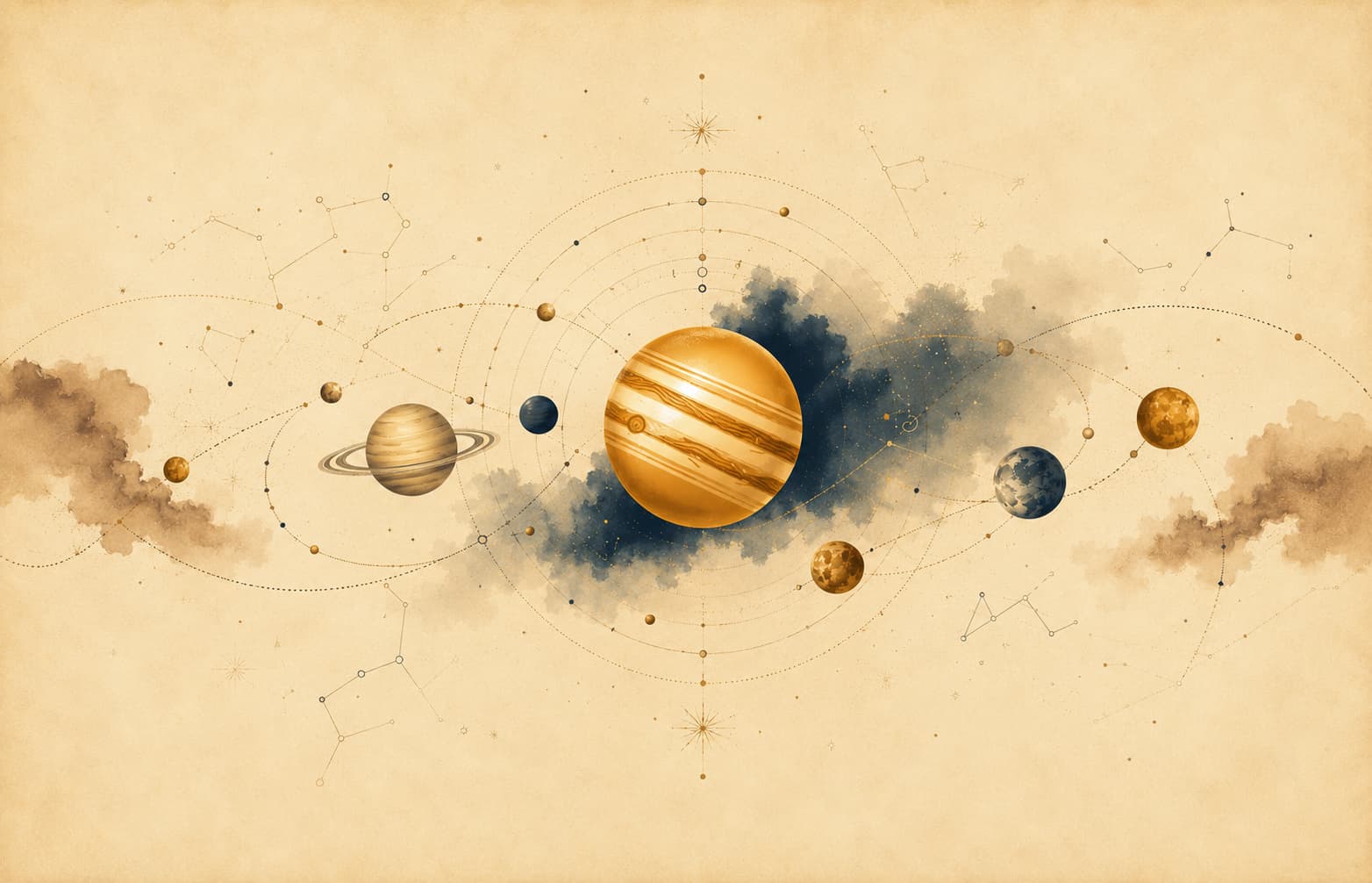
Most people who explore Vedic astrology eventually meet Vimshottari Dasha and treat it as the main clock of life. Yet classical texts speak of another system that Sage Parashara called the most respectable of all dashas. That system is Kaalchakra Dasha, also written as Kalachakra Dasha or Kaal Chakra Dasha. Its name means “the wheel of time.”
Unlike planetary periods that run from the lord of the birth Nakshatra, Kaalchakra Dasha runs through signs. The exact quarter of the Moon’s Nakshatra at birth selects a fixed sequence of nine Rashis, each lasting a set number of years. The result is a timing tool that many experienced astrologers use to refine predictions, especially when they want insight into physical vitality, inner experience, and the deeper flow of events.
This article explains the system in plain language. You will learn what Kaalchakra Dasha is, how it is calculated at a conceptual level, what Deha and Jeeva Rashis signify, how the special leaps work, and how to interpret the periods without overclaiming certainty. The complete birth chart remains essential. No single dasha system stands alone.
Quick Key Takeaways
- Kaalchakra Dasha is a Rashi (sign) based timing system described in Brihat Parashara Hora Shastra.
- It begins from the Moon’s exact Nakshatra pada at birth and follows either a forward (Savya) or reverse (Apasavya) sequence of nine signs.
- Each sign’s period length matches the years traditionally allotted to its ruling planet.
- The first and last signs in the sequence become Deha (body) and Jeeva (soul or life force) Rashis, carrying special weight for health and inner state.
- Special leaps called Simhavalokana, Markati and Mandooki appear in the sequence and are traditionally given distinct results.
- Accurate birth time is critical because a small shift in the Moon’s longitude can change the pada and therefore the entire sequence.
- The system is best used as a complementary lens alongside Vimshottari rather than as a replacement.
Meaning and Basic Concept of Kaalchakra Dasha
Kaalchakra is formed from two Sanskrit words: Kaala (time) and Chakra (wheel or cycle). In Jyotisha it refers to a predictive method that maps the unfolding of life events through successive Rashi periods.
Classical tradition holds that the system was explained by Lord Shiva to Goddess Parvati and later recorded by Sage Parashara. In Brihat Parashara Hora Shastra, Parashara is said to have described it as the most respectable of all dasha systems. Whether one accepts the mythological framing or not, the technical description is clear: this is a Rashi Dasha keyed to the Moon’s position in a specific 3°20′ segment of a Nakshatra.
The practical difference from the more familiar Udu dashas (Vimshottari, Ashtottari, Yogini and others) is important. Those systems assign periods to planets. Kaalchakra assigns periods to signs. The sign that is operating becomes the temporary focus. Its natural qualities, the house it occupies in the birth chart, the planets placed in it, its lord, and the aspects it receives all come into play.
Because the sequence is fixed once the birth pada is known, the total span of one full cycle (called Paramayur) is not the same for every person. Depending on the pada, the nine-sign sequence adds up to roughly 83, 85, 86 or 100 years. When a person lives longer than that span, the sequence is understood to repeat from the beginning, just as Vimshottari repeats after 120 years.
Why Kaalchakra Dasha Matters in Chart Analysis
Vimshottari remains the default system for most day-to-day work because it is relatively stable and well documented. Kaalchakra adds a different layer. Many practitioners find it especially useful for:
- Timing physical vitality and periods of health stress (through the Deha Rashi)
- Understanding shifts in mental or emotional orientation (through the Jeeva Rashi)
- Confirming or refining events already suggested by Vimshottari
- Examining the inner sense of connection or disconnection with outer achievements
- Studying longevity themes when other Ayurdaya methods are also considered
The system is sensitive to birth time. A difference of a few minutes can move the Moon from one pada into the next and change the entire sequence. For this reason it is rarely used alone when the birth time is uncertain. When the time is reliable, however, the sign periods often highlight phases that planetary periods alone do not emphasise as clearly.
A focused study of the grahas involved can be found in the Sun and Moon in Jyotish.
How Kaalchakra Dasha Is Calculated (Conceptual Level)
Full hand calculation requires tables of sequences for every Nakshatra pada and careful attention to direction. Software that follows classical rules is commonly used, yet understanding the logic prevents blind reliance on any programme.
Step 1: Identify the Moon’s Nakshatra and Pada
Locate the sidereal longitude of the Moon at birth. Each Nakshatra spans 13°20′ and is divided into four padas of 3°20′ each. The exact pada is the key that selects the sequence.
Step 2: Determine Savya or Apasavya Direction
The twenty-seven Nakshatras are grouped in alternating blocks of three:
- Ashwini, Bharani, Krittika – Savya (forward)
- Rohini, Mrigashira, Ardra – Apasavya (reverse)
- Punarvasu, Pushya, Ashlesha – Savya
- and so on around the zodiac.
Savya sequences move in the natural order of signs. Apasavya sequences move in the reverse order. The direction is fixed by the birth Nakshatra group; it does not change during the life.
Step 3: Select the Starting Sign and the Nine-Sign Sequence
Each of the four padas of a Nakshatra has its own starting Rashi and its own ordered list of nine signs. The classical texts give these sequences. Once the starting sign is known, the remaining eight follow according to the Savya or Apasavya pattern, including any prescribed leaps.
Step 4: Assign Period Lengths
Each Rashi receives the number of years traditionally given to its lord:
| Rashi | Lord | Years |
|---|---|---|
| Mesha (Aries) | Mars | 7 |
| Vrishabha (Taurus) | Venus | 16 |
| Mithuna (Gemini) | Mercury | 9 |
| Karka (Cancer) | Moon | 21 |
| Simha (Leo) | Sun | 5 |
| Kanya (Virgo) | Mercury | 9 |
| Tula (Libra) | Venus | 16 |
| Vrishchika (Scorpio) | Mars | 7 |
| Dhanu (Sagittarius) | Jupiter | 10 |
| Makara (Capricorn) | Saturn | 4 |
| Kumbha (Aquarius) | Saturn | 4 |
| Meena (Pisces) | Jupiter | 10 |
The sum of the nine periods in a given sequence becomes that person’s Paramayur for the cycle.
Step 5: Balance at Birth and Sub-Periods
The portion of the first Rashi period already elapsed is calculated from the remaining arc of the Moon’s pada, exactly as the balance of Vimshottari is calculated from the remaining arc of the Nakshatra. Antardashas (sub-periods) are then formed from the subsequent signs in the same sequence, proportionally.
Different classical commentators and modern researchers have proposed slightly different ways of handling the leaps and the exact starting points. This is one reason why two software packages or two experienced astrologers may produce slightly different timelines from the same birth data. The underlying principle, however, remains consistent: the Moon’s pada selects a fixed Rashi sequence whose periods are measured in years according to the lords of those signs.
Deha and Jeeva Rashis: The Unique Feature
Every Kaalchakra sequence has two especially sensitive signs.
- In a Savya sequence the first Rashi is called Deha (body) and the ninth (last) Rashi is called Jeeva or Jiv (life force, soul, or spirit).
- In an Apasavya sequence the assignment is reversed: the ninth becomes Deha and the first becomes Jeeva.
Deha Rashi is traditionally linked with the physical body, material circumstances, and outer vitality. Jeeva Rashi is linked with the inner sense of self, mental-emotional state, and the feeling of being connected or disconnected from the events of life.
Planets placed in these two signs at birth, and planets that transit them later, are watched carefully. Benefics in or transiting Deha or Jeeva may support sudden positive shifts in health or inner clarity. Malefics may coincide with periods of physical strain or emotional isolation. The house position of these signs in the birth chart further colours the results. When both signs fall in dusthana houses (6, 8, 12) the native may experience more turbulent changes; when they fall in kendras or trikonas the same changes often carry a more constructive tone.
Even without calculating the full dasha sequence, many astrologers note the Deha and Jeeva Rashis from the Moon’s pada and use them as an additional layer of analysis during major transits or dasha changes.
Special Leaps in the Sequence: Simhavalokana, Markati and Mandooki
The sequence of signs does not always move in a perfectly regular step. Classical descriptions mention three kinds of irregular motion, each given a distinctive name and traditional result:
-
Simhavalokana Gati (lion’s glance or leap)
A trinal jump, for example from Sagittarius to Aries or from Pisces to Scorpio (and the reverse). The sign that arrives after such a leap is said to carry a sudden, powerful quality, sometimes compared to a lion turning its head. -
Markati Gati (monkey’s leap)
A temporary reversal of direction within the sequence. The sign that follows the reversal is traditionally associated with changeable or restless results. -
Mandooki Gati (frog’s leap)
Skipping one sign and landing on the next. The arrived sign is said to produce results that appear abruptly, like a frog jumping.
These special signs are given extra attention when they become the operating Mahadasha or Antardasha. The classical texts attribute specific flavours to them, yet the actual outcome still depends on the condition of the sign and its lord in the individual chart.
How to Interpret a Kaalchakra Period
Interpretation follows the same disciplined logic used for any Rashi Dasha.
-
Natural nature of the sign
Aries periods may emphasise initiative, courage or conflict. Cancer periods may emphasise emotional security, home or maternal themes. The natural significations provide the first layer. -
House occupied by the dasha Rashi from the Lagna
If the operating sign is the 10th house, professional matters come forward. If it is the 7th, partnerships and public dealings gain importance. The same sign will activate different life areas for different Ascendants. -
Planets placed in the dasha Rashi
Benefics generally support constructive expression; malefics may introduce friction or intensity. The strength, dignity and aspects of those planets refine the picture. -
Lord of the dasha Rashi
The house placement, dignity, aspects and conjunctions of the sign lord show how the period’s promise is delivered. A strong, well-placed lord tends to give clearer and more positive results. -
Divisional charts
The same Rashi is examined in relevant Vargas. In D-10 the period may speak of career involvement; in D-9 of marital or dharmic orientation; in D-24 of learning and knowledge. -
Ashtakavarga
Samudaya Ashtakavarga points in the dasha Rashi help gauge the overall support available during that period. Higher points often correlate with smoother expression of the sign’s themes. -
Current transits and the running Vimshottari
When a Kaalchakra Rashi period coincides with a supportive Vimshottari Antardasha and favourable Gochar, the results tend to manifest more clearly. Conflicting influences produce mixed or delayed outcomes.
The system does not promise that every person running, for example, a Leo period will become famous or face ego conflicts. The chart’s overall promise, the strength of the involved factors, and the supporting or obstructing dashas and transits decide the actual experience.
Positive and Challenging Expressions
Constructive possibilities
When the dasha Rashi and its lord are strong, the period can bring focused growth in the areas ruled by that sign and house. Deha periods with benefic support may coincide with improved physical energy or successful attention to health. Jeeva periods with benefic influence may bring a sense of inner alignment, clearer purpose or spiritual interest. Special leap signs, when well fortified, can produce sudden opportunities or rapid progress.
Challenging possibilities
Afflicted Deha periods may highlight health concerns or physical strain that require practical care. Afflicted Jeeva periods may bring feelings of isolation, restlessness or loss of meaning even when outer circumstances look successful. Weak or heavily aspected leap signs can produce abrupt disruptions. None of these outcomes is automatic. They become more likely when multiple confirming factors appear together and when the natal chart already contains corresponding vulnerabilities.
Factors That Modify the Results
Several conditions can strengthen, weaken or redirect a Kaalchakra period:
- Dignity of the Rashi lord (exaltation, own sign, debilitation, combustion)
- Functional benefic or malefic status of the lord for the specific Lagna
- Conjunctions and aspects from other planets
- Strength in Shadbala and in relevant divisional charts
- Presence of yogas involving the dasha Rashi or its lord
- Concurrent Vimshottari Mahadasha and Antardasha
- Transits over the Deha and Jeeva Rashis
- Overall Ashtakavarga strength of the sign
- Accuracy of the birth time itself
Because calculation disagreements exist among classical and modern authorities, two competent astrologers may arrive at slightly different sequences. Cross-checking with life events and with other dasha systems remains a wise practice.
How to Examine Kaalchakra Dasha in a Birth Chart: Practical Sequence
- Confirm the birth time is reliable enough for pada-level accuracy.
- Note the Moon’s Nakshatra and exact pada.
- Identify whether the Nakshatra belongs to a Savya or Apasavya group.
- Determine the starting Rashi and the nine-sign sequence (using classical tables or reliable software).
- Calculate the balance of the first period and the subsequent Mahadashas.
- Mark the Deha and Jeeva Rashis.
- For the current or upcoming period, examine the Rashi’s house position, occupants, lord, aspects, Varga strength and Ashtakavarga.
- Compare the indications with the simultaneous Vimshottari periods and current transits.
- Note any special leap signs that are operating.
- Form a nuanced judgement that respects both constructive and challenging possibilities.
A hypothetical illustration may help. Suppose the Moon is in the third pada of a Savya Nakshatra that begins a sequence with Cancer as the first sign. Cancer becomes Deha. The ninth sign in that sequence becomes Jeeva. If the native’s Lagna is Libra, Cancer occupies the 10th house. During the Cancer Mahadasha the career house is activated through the Kaalchakra lens. The condition of the Moon, planets in Cancer, and the strength of Cancer in D-10 will shape whether the period feels supportive for professional growth or brings emotional strain at work. The simultaneous Vimshottari period supplies a second, independent layer of timing.
Its timing layer becomes clearer when the chart is compared with Dasha Sandhi.
Common Misconceptions
-
“Kaalchakra Dasha replaces Vimshottari.”
It does not. Most practitioners treat it as a complementary system. -
“The system works only when the Moon is stronger in Navamsha.”
Parashara does not impose this condition. Some later writers suggested it, but many experienced users apply the dasha to all charts when the birth time is accurate. -
“Every special leap produces dramatic events.”
The leap draws attention to the arrived sign; the actual intensity still depends on chart factors. -
“Deha and Jeeva alone determine health and longevity.”
They are sensitive points, not the sole determinants. Full Ayurdaya analysis and medical advice remain necessary for health questions. -
“Software always gives the correct sequence.”
Different programmes follow different classical interpretations. Understanding the principles helps the user evaluate the output.
Traditional Remedies and Practical Guidance
Classical Jyotisha associates remedies with the planets and signs involved rather than with the dasha system itself. When a difficult Kaalchakra period is indicated, traditional approaches include:
- Strengthening the lord of the afflicted Deha or Jeeva Rashi through ethical conduct, charity related to that planet’s significations, and sincere prayer according to the individual’s faith.
- Paying special attention to physical health during Deha periods that carry malefic influence, without abandoning medical treatment.
- Using periods of Jeeva stress for quiet reflection, meditation or study rather than forcing outer activity.
- Maintaining the constructive habits associated with the operating sign (discipline for Saturn signs, generosity for Jupiter signs, clarity for Mercury signs, and so on).
Gemstones, elaborate rituals or severe fasting should never be recommended casually. Suitability depends on the complete chart, the person’s health, and personal circumstances. Fear-based selling of remedies has no place in responsible practice.
Conclusion
Kaalchakra Dasha offers a distinctive way of watching the wheel of time turn through successive signs. Rooted in the Parashari tradition and keyed to the precise pada of the Moon, it highlights physical and inner currents that planetary dashas sometimes leave less visible. Its calculation demands accuracy, its interpretation demands the full chart, and its best use is usually in dialogue with Vimshottari and transit analysis.
When approached with technical care and without exaggerated claims, the system becomes a valuable additional lens. It does not remove free will or the need for practical effort. It simply maps one more layer of the timing that classical Jyotisha has long studied.
Frequently Asked Questions
1. Is Kaalchakra Dasha more accurate than Vimshottari?
Accuracy depends on the skill of the astrologer, the reliability of the birth time, and the specific question being asked. Many practitioners find Kaalchakra excellent for refining timing and for reading physical and psychological undercurrents, while Vimshottari remains the more stable general system. Using both together is often more useful than choosing one exclusively.
2. Can Kaalchakra Dasha be used for every chart?
Parashara presents it without restrictive conditions. In practice it works best when the birth time is known with sufficient precision to identify the correct Nakshatra pada. When the time is uncertain, the sequence itself becomes unreliable.
3. What is the difference between Deha and Jeeva Rashi?
Deha relates primarily to the body and material circumstances. Jeeva relates to the inner sense of self, emotional tone and feeling of connection with life events. Both are identified from the first and ninth signs of the sequence, with the assignment reversed according to Savya or Apasavya birth.
4. Why do different software programmes show different Kaalchakra periods?
Commentators differ on the exact handling of leaps, starting points and antardasha construction. Software follows the particular school chosen by its developers. Comparing results and testing against known life events helps the user decide which version is more consistent for a given chart.
5. How long is one full Kaalchakra cycle?
There is no single fixed length. Depending on the birth pada the nine-sign sequence totals approximately 83, 85, 86 or 100 years. The cycle is understood to repeat if the person lives beyond that span.
6. Should health predictions be made from Deha Rashi alone?
No. Deha is a sensitive point, but health analysis requires examination of the Lagna, its lord, the 6th and 8th houses, relevant Vargas, concurrent dashas, transits and, above all, qualified medical advice. Astrology does not replace diagnosis or treatment.
7. Is Kaalchakra Dasha part of Jaimini astrology?
No. Although it is a Rashi-based system, it belongs to the Parashari tradition as described in Brihat Parashara Hora Shastra. Jaimini has its own set of Rashi dashas, most notably Chara Dasha, which uses different rules for period lengths.
8. Can beginners calculate Kaalchakra Dasha by hand?
The conceptual steps are understandable, but the full tables of sequences and the correct treatment of leaps require careful study of classical sources or reliable modern commentaries. Most students begin with software that follows a transparent classical method and later verify the logic by hand.
Three Internal-Link Anchor Suggestions:
- Vimshottari Dasha explained
- How to read Nakshatra padas in the birth chart
- Understanding Deha and Jeeva points in predictive astrology
Two Related-Article Suggestions:
- A practical comparison of major Dasha systems used in Vedic astrology
- Birth-time rectification methods when Nakshatra pada accuracy is required
Important Factual Statements Requiring Editorial Verification:
- Exact wording and chapter placement of Parashara’s statement that Kaalchakra is the most respectable dasha.
- Precise year allotments and sequence tables for every Nakshatra pada as given in the version of BPHS being followed.
- Consistency of Deha-Jeeva assignment across different classical commentaries.
Sources Consulted (conceptual framework): Brihat Parashara Hora Shastra (Kalachakra Dasha chapter), standard explanatory works on Rashi dashas, and established modern commentaries that clarify calculation differences without inventing verses.
Disclaimer: This article is for educational purposes within the framework of traditional Vedic astrology. It does not constitute personal prediction, medical advice, or a substitute for professional consultation with a qualified astrologer or healthcare practitioner. Individual results always depend on the complete birth chart and real-life circumstances.
About the author
Meera Sundaram
Contributing Editor, Dashas and Transits
Meera Sundaram specializes in the timing systems of Jyotish. She writes about Vimshottari, Yogini and Kaalchakra Dashas, Dasha Sandhi, planetary sub-periods and the slow transits that activate a natal promise. Her work focuses on careful sequencing and probability, helping readers understand when a theme may become active without treating timing as an unavoidable verdict.
Read the full bioContinue reading
10 Behaviours Seen During Rahu Mahadasha or with Dominant Rahu Placement

Living Through Sade Sati Without Fear: What Saturn Is Really Testing