Dasha Sandhi Explained: What Happens When One Mahadasha Ends and Another Begins
Learn what Dasha Sandhi means in Vedic astrology. Discover emotional and practical shifts when one Mahadasha ends and another begins, plus key Jyotish factors that shape the transition.
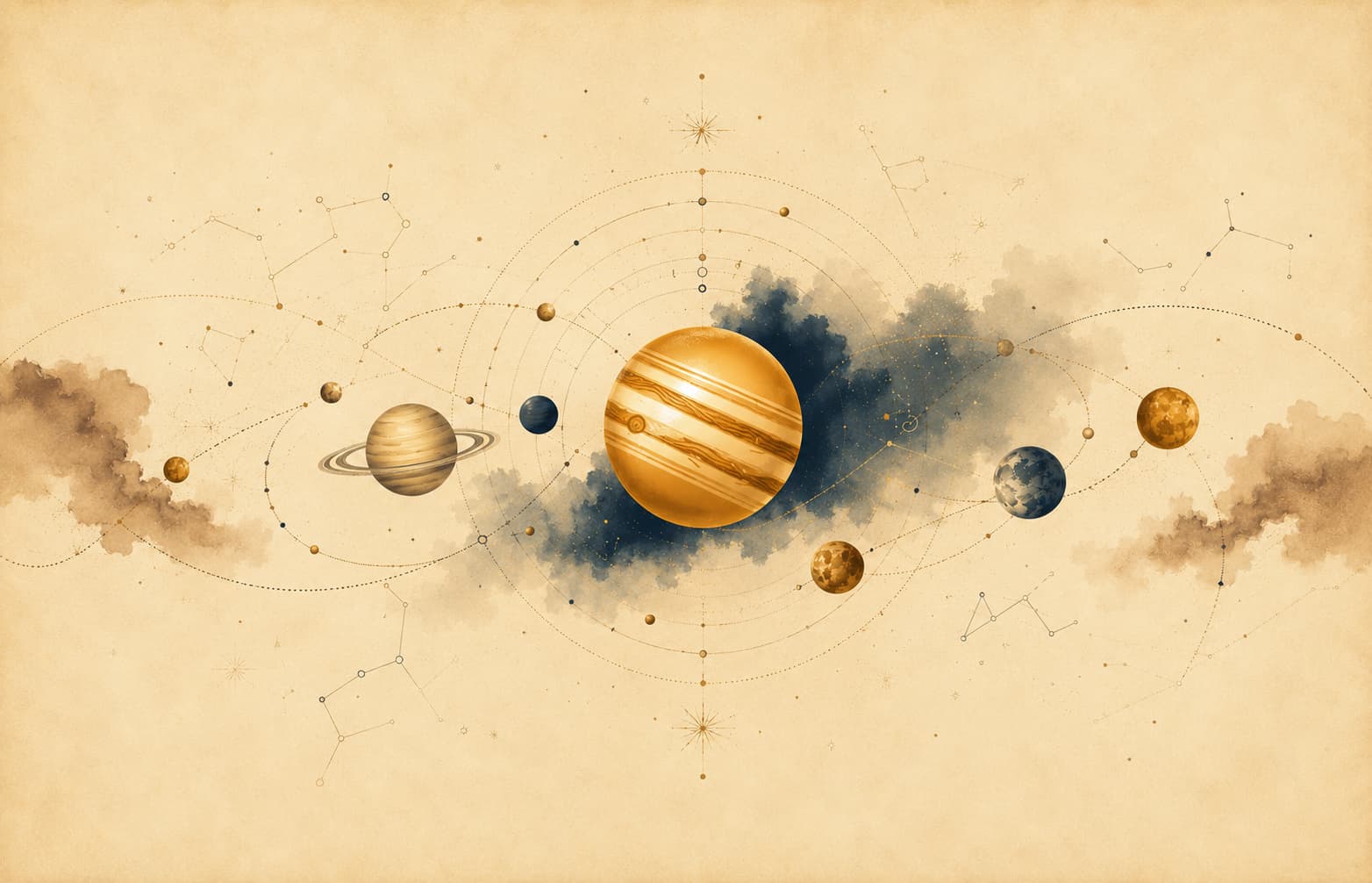
Many people notice that life does not switch direction the moment a major planetary period ends. Instead, the months surrounding the change often feel unsettled, mixed, or strangely familiar yet new. Old patterns lose their grip more slowly than expected. New concerns, opportunities, or inner moods begin to surface before the official date arrives. This overlapping phase is known in Vedic astrology as Dasha Sandhi.
Dasha Sandhi refers to the transitional period when one Mahadasha concludes and the next begins. In the widely used Vimshottari system, each Mahadasha lasts a fixed number of years governed by a single planet. The change from one planet’s long period to another is rarely abrupt. Classical timing methods and practical observation both show that the influence of the outgoing planet softens gradually while the incoming planet’s themes start to appear. The result is a stretch of time that can feel emotionally charged, practically demanding, and occasionally confusing.
This article explains what Dasha Sandhi means, why the shift is gradual, the emotional and practical changes people commonly experience, and the specific Jyotish factors that determine how the transition unfolds for an individual. Interpretation always depends on the complete birth chart. No single rule applies to every person in the same way.
A stronger technical foundation for this factor can be found in Vedic astrology apps and software.
Key Takeaways
- Dasha Sandhi is the junction between two successive Mahadashas.
- The final Antardasha of the outgoing period and the early phase of the new Mahadasha often carry mixed influences.
- Emotional restlessness, shifts in priorities, and practical rearrangements are common near the change.
- The relationship between the two planetary lords, their strength in the Navamsha, and current transits modify the experience.
- A gradual fade of the old period is normal rather than a sudden cut-off.
- Careful chart analysis is required before drawing personal conclusions.
What Dasha Sandhi Means in Vedic Astrology
In the Vimshottari Dasha system, life is divided into major periods called Mahadashas. Each is ruled by one of the nine grahas: the Sun, Moon, Mars, Mercury, Jupiter, Venus, Saturn, Rahu, or Ketu. The length of each period is fixed, ranging from six years for the Sun to twenty years for Venus. These periods are further divided into Antardashas (sub-periods) and still smaller units.
Dasha Sandhi is the zone of transition that surrounds the exact moment one Mahadasha ends and the next begins. Astrologers traditionally examine a span that includes the last Antardasha of the outgoing Mahadasha and the opening months of the incoming one. Some practitioners look at a window of roughly six months on either side of the change date. Others focus more tightly on the final months of the old period and the first months of the new one. The precise length is less important than the recognition that planetary influence does not switch like a light.
The concept rests on a simple observational truth. Planetary periods operate through a process of activation and gradual withdrawal. The significations of a planet do not vanish the instant its Mahadasha ends. Likewise, the next planet does not suddenly dominate every area of life on the first day of its period. Themes blend for a time.
Why the Old Period Fades Gradually
Several reasons explain the gradual nature of the change.
First, the Antardasha sequence itself creates continuity. Within any Mahadasha the sub-periods run in a fixed order. The final Antardasha of a Mahadasha belongs to the planet that immediately precedes the next Mahadasha lord in the natural sequence. This last sub-period already carries some flavour of what is coming next, because the Antardasha lord is connected to the incoming planet through the cyclic order of the dashas.
Second, the natal placement and strength of both planets continue to operate. The outgoing Mahadasha lord does not lose its natal dignity or house ownership the moment its period ends. Its residual influence lingers through ongoing transits, residual karma associated with the houses it rules, and the habits formed during its long rule. At the same time, the incoming planet has already been present in the chart. Its themes have been preparing in the background.
Third, human life itself is continuous. Career decisions, relationship patterns, health routines, and psychological tendencies do not reset on a calendar date. The dasha system describes the activation of latent potentials rather than the creation of entirely new personalities. Therefore the outer circumstances and inner orientation shift by degrees.
Fourth, current planetary transits (Gochar) act as a bridge. When slow-moving planets such as Saturn or Jupiter aspect or conjunct the outgoing or incoming dasha lords, they can either prolong the flavour of the ending period or accelerate the arrival of the new one. Transits of the nodes can further complicate the picture by introducing sudden or unexpected elements.
Taken together, these factors produce a period in which old themes lose intensity while new ones gain visibility. The experience is rarely clean or one-sided.
Emotional Changes Near Mahadasha Transitions
Emotional patterns often become more noticeable during Dasha Sandhi. People report a sense of being between two chapters. The emotional tone of the outgoing planet begins to feel less compelling, yet the new planet’s emotional signature has not fully settled.
When a beneficial or comfortable Mahadasha is ending, the dominant feeling may be mild nostalgia mixed with restlessness. Familiar sources of security no longer satisfy in the same way. A person may look back on the previous years with a mixture of gratitude and quiet dissatisfaction. The urge to move on appears even if the practical situation remains unchanged.
When a difficult Mahadasha is concluding, relief can arrive gradually rather than all at once. Residual tension or fatigue may continue for some months. At the same time, a subtle lifting of pressure becomes perceptible. Mood stabilises in stages. Confidence or optimism may return in patches rather than as a sudden breakthrough.
The incoming planet introduces its own emotional colour. A shift into a Jupiter Mahadasha, for example, may bring a growing interest in meaning, teaching, or expansion, even before the period formally begins. A move into a Saturn Mahadasha can produce an early sense of seriousness, responsibility, or the need for greater structure. Rahu or Ketu transitions often carry a stronger sense of discontinuity, restlessness, or sudden inner questioning.
Common emotional experiences reported near Sandhi include:
- Fluctuating motivation
- Heightened sensitivity to change
- Temporary confusion about priorities
- A feeling of standing at a threshold
- Increased introspection or review of the past
- Mild anxiety about the future mixed with curiosity
These states are not inevitable for every person. Their intensity depends on the functional nature of the two planets in the individual chart, the houses they rule, and the overall strength of the lagna and Moon.
Practical Changes During the Transition
Practical life also tends to rearrange itself near a Mahadasha change. The rearrangement is rarely dramatic on a single day. More often it appears as a series of small adjustments that accumulate.
Career and professional matters frequently show early signs. Projects begun under the outgoing planet may reach a natural conclusion or lose momentum. New professional interests or contacts linked to the incoming planet start to appear. A person may find themselves reviewing long-term goals, updating skills, or reconsidering the direction of work even while the formal period has not yet changed.
In family and relationship life, communication patterns or mutual expectations can shift. Old agreements may feel outdated. New understandings begin to form. This does not mean relationships break or form solely because of Sandhi. Rather, the dasha transition provides a background climate in which existing dynamics become more visible and open to renegotiation.
Financial patterns sometimes show a similar gradual adjustment. Spending priorities or sources of income associated with the outgoing planet lose relevance. New financial considerations linked to the incoming planet start to demand attention. Health routines and daily discipline may also change as the body and mind respond to the shifting planetary climate.
Property, travel, education, and creative projects follow the same principle. Activities that belonged strongly to the previous Mahadasha tend to wind down or transform, while themes of the next period gather early momentum.
The practical advice that follows from this understanding is simple. Major irreversible decisions are best approached with extra care during the immediate Sandhi window. At the same time, the period is often useful for reflection, planning, and small preparatory steps that align with the incoming planetary themes.
Jyotish Analysis of Dasha Sandhi
Accurate interpretation of any Sandhi requires more than knowing the dates of the two Mahadashas. Several technical factors must be examined together.
The Final Antardasha of the Outgoing Mahadasha
The last Antardasha of a Mahadasha carries special weight. Because the Antardasha sequence follows a fixed planetary order, the final sub-period is ruled by the planet that stands immediately before the next Mahadasha lord in the Vimshottari cycle. This creates a natural bridge. The events and moods of that final Antardasha often contain hints of the coming period while still operating under the overall umbrella of the outgoing Mahadasha.
Astrologers therefore study the house placement, dignity, aspects, and functional nature of this final Antardasha lord. Its condition indicates how smoothly or unevenly the transition is likely to proceed. A well-placed final Antardasha lord can ease the change. A afflicted one may produce a more turbulent or delayed shift.
The Incoming Mahadasha Lord
The planet that is about to take over becomes increasingly active even before its period formally starts. Its natal house, sign, aspects, and conjunctions begin to colour decisions and circumstances. The strength of this planet in the birth chart and in the Navamsha determines how clearly and constructively its themes will express once the new Mahadasha begins.
Particular attention is paid to the houses ruled by the incoming planet. Those areas of life usually start to receive more attention during the Sandhi phase. If the planet rules the lagna or the tenth house, for example, questions of identity or career direction often surface early. If it rules the seventh or second house, relationship or financial themes may come forward.
Planetary Relationships Between the Two Lords
The natural and temporal relationship between the outgoing and incoming Mahadasha lords is a key modifying factor. Planets that are natural friends, or that become temporary friends because of their house positions, tend to produce a more cooperative transition. Planets that are natural enemies or temporary enemies may create friction, mixed results, or a sense of internal conflict during the changeover.
For instance, a shift from a Venus Mahadasha into a Jupiter Mahadasha involves two planets that are natural friends. The transition often feels relatively smooth, with themes of harmony and expansion blending over time. A move from the Moon into Saturn, by contrast, involves planets that have a more complex relationship. The emotional climate of the Moon period may give way to a more sober and structured atmosphere with noticeable effort.
The same principle applies to temporary friendship calculated from the lagna. Two planets that occupy mutually supportive houses can ease a transition even if they are natural neutrals or mild enemies.
Nakshatra Dispositor and Placement
The nakshatra occupied by each Mahadasha lord adds another layer. The dispositor of that nakshatra (the planet that rules the nakshatra) influences how the dasha themes are expressed. During Sandhi, the relationship between the nakshatra dispositors of the two Mahadasha lords can either support continuity or introduce discontinuity.
If both planets occupy nakshatras ruled by friendly dispositors, the transition tends to feel more coherent. If the nakshatras are ruled by planets that conflict, the change may feel more abrupt or require greater conscious adjustment. The pada of the nakshatra further refines the picture, especially when the Navamsha is examined.
Strength in the Navamsha (D9)
The Navamsha chart is essential for assessing the true strength and maturity of both the outgoing and incoming planets. A planet that appears average in the Rashi chart but is exalted, in its own sign, or well-aspected in the Navamsha often delivers stronger and more stable results once its Mahadasha begins. Conversely, a planet that is weak or afflicted in the Navamsha may struggle to express its full potential even if it looks strong in the main chart.
During Sandhi, the relative Navamsha strength of the two planets helps explain why one period’s influence fades more slowly or more quickly than expected. A strong outgoing planet in the D9 may continue to colour events well into the early months of the new Mahadasha. A strong incoming planet in the D9 may assert itself earlier and more clearly.
Current Transits and Supporting Factors
Transits of the slow planets, particularly Saturn, Jupiter, and the nodes, act as timing triggers around Sandhi. When Saturn aspects or conjuncts the outgoing Mahadasha lord, residual responsibilities or delays associated with the ending period may persist. When Jupiter aspects the incoming lord, opportunities or constructive developments linked to the new period may appear sooner.
The transit of the Mahadasha lords themselves is also relevant. If the outgoing planet is under stress by transit at the time of the change, its final influence may feel heavier. If the incoming planet is well-supported by transit, its early results tend to be more favourable.
Additional factors include combustion, retrogression, and the overall condition of the lagna and its lord. A strong lagna helps a person navigate the transitional period with greater clarity and resilience. A challenged lagna can make the mixed influences of Sandhi feel more overwhelming.
Positive Possibilities During Dasha Sandhi
When the chart factors are supportive, Dasha Sandhi can become a constructive period of review and preparation. The gradual nature of the change allows time for reflection. A person can consciously release habits or commitments that belonged to the previous period and begin aligning daily life with the themes of the next planet.
Career transitions, for example, can be planned rather than forced. Relationship conversations can take place with greater awareness of shifting needs. Health and lifestyle adjustments can be introduced step by step. Spiritual or educational interests associated with the incoming planet can be explored without sudden pressure.
In charts where both planets are functional benefics and well-placed, the Sandhi phase often feels like a natural ripening. Old efforts begin to bear fruit while new directions open with relatively little friction.
Challenging or Mixed Expressions
Not every transition is smooth. When the two planets are mutual enemies, or when one or both are weak, afflicted, or poorly placed in the Navamsha, the Sandhi period can feel unsettled. Emotional ambiguity, practical delays, or a sense of being pulled in two directions may appear.
The nakshatra layer adds useful nuance here, particularly in Nakshatra padas.
People sometimes describe a temporary loss of direction, difficulty making decisions, or the recurrence of unresolved issues from the previous Mahadasha. Health may show residual strain. Professional or financial matters may require extra attention and patience.
These experiences are not permanent. They reflect the temporary overlap of two different planetary climates. Once the new Mahadasha establishes itself more fully, the mixed quality usually settles into a clearer pattern. The intensity of difficulty also depends on the overall promise of the chart and the supporting or challenging role of current transits.
How to Examine Dasha Sandhi in a Birth Chart
A practical sequence for studying a Mahadasha transition includes the following steps:
- Confirm the exact end date of the current Mahadasha and the start of the next using a reliable Vimshottari calculation based on the Moon’s nakshatra at birth.
- Identify the final Antardasha of the outgoing period and note its lord, house placement, and dignity.
- Study the natal placement, house lordships, aspects, and conjunctions of both the outgoing and incoming Mahadasha lords.
- Assess the natural and temporary relationship between the two planets.
- Examine the nakshatras occupied by both planets and the condition of their dispositors.
- Evaluate the strength of both planets in the Navamsha chart.
- Review current and near-future transits of Saturn, Jupiter, the nodes, and the two dasha lords themselves.
- Consider the condition of the lagna, lagna lord, and Moon for overall resilience during the transition.
- Look at the houses activated by both planets to anticipate the life areas most likely to show change.
- Form a balanced interpretation that acknowledges both continuity and shift rather than expecting an abrupt break.
This method keeps the analysis grounded in the specific chart rather than relying on general statements about any particular planetary sequence.
Common Misconceptions About Dasha Sandhi
One frequent misunderstanding is that life changes completely on the exact day a Mahadasha ends. In practice the shift is almost always gradual. Another misconception is that Sandhi is inherently difficult or dangerous. Difficulty arises only when the chart factors themselves are challenging. A well-supported transition can be constructive and clarifying.
Some readers assume that the final months of a good Mahadasha must be disappointing. This is not necessarily true. Residual positive results can continue, and the incoming planet may bring its own benefits early. Conversely, the early months of a difficult Mahadasha are not automatically the worst phase. The full expression of any period develops over time and is shaped by Antardashas and transits.
Finally, it is a mistake to interpret Sandhi without reference to the complete chart. The same planetary sequence produces very different experiences depending on lagna, house ownership, dignity, and divisional strength.
Practical Guidance for Navigating the Transition
During a known Sandhi period, several practical approaches are traditionally recommended.
Maintain regular routines that support physical and mental stability. Sudden radical changes in diet, sleep, or daily structure can amplify the sense of unsettledness. Review long-term goals and unfinished projects associated with the outgoing planet. Completing or consciously releasing them reduces residual tension.
Begin gentle preparation for themes of the incoming planet. If the next Mahadasha is associated with learning or teaching, for example, light study or skill-building can be started. If the next period emphasises responsibility and structure, small organisational improvements can be introduced.
Keep major irreversible decisions under additional scrutiny. When possible, allow a few months on either side of the change date before finalising large commitments. At the same time, do not postpone all action indefinitely. Thoughtful, measured steps are usually better than complete inertia.
Traditional supportive practices linked to the two planets can be observed according to personal belief and capacity. These may include simple charity, respectful service, mantra recitation, or time spent in quiet reflection. Such practices are understood as aids to mental clarity and ethical alignment rather than as guaranteed solutions.
Conclusion
Dasha Sandhi is the natural junction between two major chapters of planetary influence. The old Mahadasha does not disappear overnight, and the new one does not arrive fully formed on the first day. Emotional tones shift by degrees. Practical arrangements rearrange themselves over months. The final Antardasha of the outgoing period, the nature of the incoming lord, the relationship between the two planets, their nakshatra dispositors, Navamsha strength, and supporting or challenging transits all shape the character of the transition.
Its timing layer becomes clearer when the chart is compared with Mahadasha and Antardasha relationships.
Understanding these factors helps a person meet the period with greater awareness. Life continues to move according to the deeper promise of the birth chart. The Sandhi phase simply makes the process of change more visible. Careful study of the individual Kundli remains the most reliable guide to how any particular transition will be experienced.
Frequently Asked Questions
What is the usual duration of Dasha Sandhi? There is no single fixed length. Many astrologers examine a window of several months on either side of the exact change date, paying special attention to the final Antardasha of the outgoing Mahadasha and the early months of the new period. The practical experience of transition often lasts longer than a single calendar month.
Does every Mahadasha change feel the same? No. The quality of the transition depends on the specific planets involved, their functional roles in the chart, their mutual relationship, and their strength in the Rashi and Navamsha charts. Some changes feel relatively smooth. Others feel more mixed or demanding.
Can the effects of the old Mahadasha continue after it has ended? Yes. Residual influence is common, especially when the outgoing planet is strong in the Navamsha or when current transits continue to activate it. The intensity usually decreases over time as the new Mahadasha establishes itself.
Is Dasha Sandhi always a difficult time? Not necessarily. Difficulty arises mainly when the planets involved are weak, afflicted, or mutually hostile, or when the houses they activate are under stress. A well-supported transition can be a period of useful review and gradual realignment.
How important is the Navamsha during Sandhi analysis? Very important. The Navamsha reveals the underlying strength and maturity of both the outgoing and incoming planets. A planet that is strong in the D9 tends to express its themes more clearly and stably once its period is active.
Should major decisions be avoided during Dasha Sandhi? Extra care is advisable for irreversible decisions. Reflection and measured preparation are often more helpful than either complete inaction or sudden large changes. The complete chart and current transits should be considered before drawing firm conclusions.
Do transits matter more than the dasha change itself? Both are relevant. The dasha change sets the longer background climate. Transits act as shorter-term triggers that can either ease or intensify the experience of the transition. Neither should be examined in isolation.
Is the experience the same for every lagna? No. The lagna and its lord strongly influence how a person processes change. A strong lagna generally supports greater clarity and resilience during transitional periods. The houses ruled by the two Mahadasha lords further customise the areas of life that feel the shift most clearly.
About the author
Meera Sundaram
Contributing Editor, Dashas and Transits
Meera Sundaram specializes in the timing systems of Jyotish. She writes about Vimshottari, Yogini and Kaalchakra Dashas, Dasha Sandhi, planetary sub-periods and the slow transits that activate a natal promise. Her work focuses on careful sequencing and probability, helping readers understand when a theme may become active without treating timing as an unavoidable verdict.
Read the full bioContinue reading
Kaalchakra Dasha Explained: Meaning, Calculation and Interpretation in Vedic Astrology
10 Behaviours Seen During Rahu Mahadasha or with Dominant Rahu Placement